
OHH! Italy Journal · Interview
The sommelier as a custodian of hospitality, territory and the elegant gesture.
A conversation on wine as a language of hospitality, from the wine culture of Alto Adige–Südtirol to international experiences shaped with OHH! Italy.
The Conversation
Wine, hospitality and the rhythm of a place.
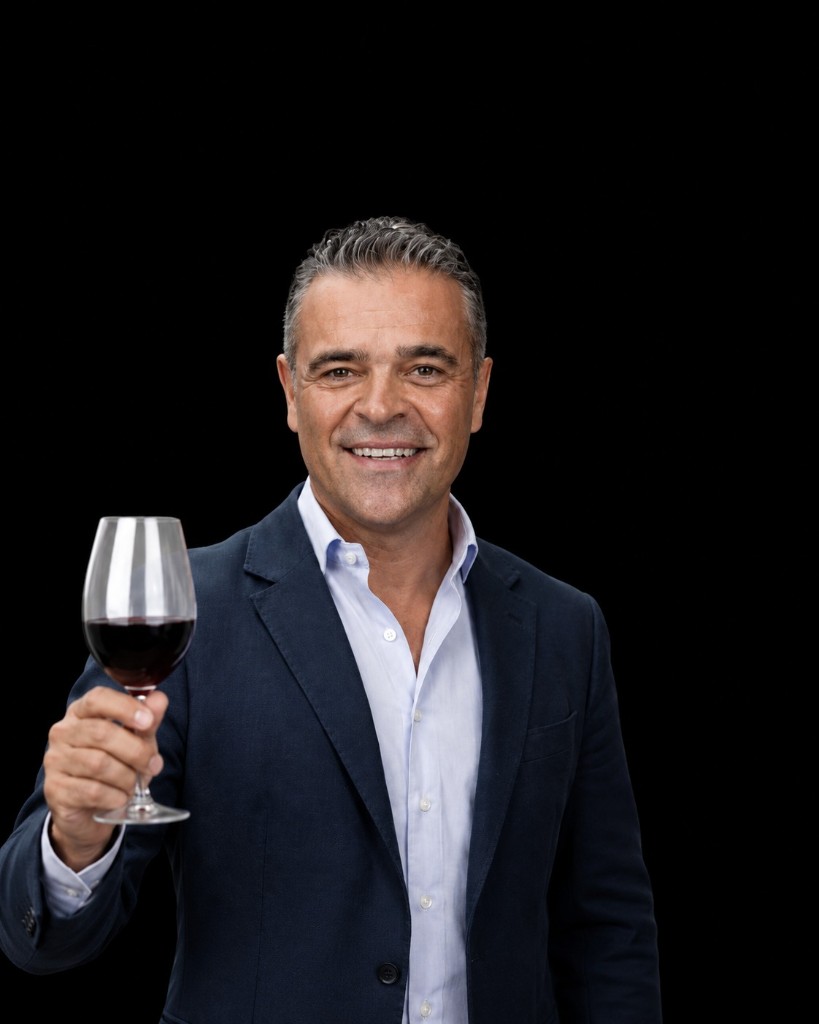
In this interview, Raoul Ragazzi describes sommellerie as a form of hospitality: not only wine service, but listening, measure, storytelling, territory and care for the guest.
The conversation also grows from his collaboration with OHH! Italy for Summer Camp 2024, where wine was not placed at the centre of the scene, but used as a quiet thread capable of connecting people, places and moments.
Raoul, how would you describe your path into wine and sommellerie?
I would say I did not arrive at wine. I returned to it. Like many Italians, I knew wine before I understood it, through my grandparents, because wine belongs to the table, to language, to the gestures of home. Something changed when I stopped simply drinking it and began listening to it.
From that moment, sommellerie became a way of studying, of reading a territory through a glass. I like to think of the sommelier as an interpreter: he adds nothing to what the wine already is, but translates it for the person meeting it. It is a craft made of patience and attention — two virtues the Greeks might simply have called measure.
What does it mean today to be a “perfect sommelier”?
It means, first of all, forgetting the word perfect. The sommelier who interests me does not simply serve a wine: he welcomes a person. Wine is only the final gesture in a chain made of gaze, listening, rhythm and the right silence at the right time.
He tells the story of a territory without turning it into a lesson, suggests a pairing without imposing it, and measures every gesture because elegance is never excess. For the Greeks, hospitality was sacred. They called it xenia: the duty to treat the stranger as a gift. I like to believe that the sommelier, in his own small way, is still one of its custodians. He pours wine, but in truth he offers attention. And attention, today, may be the rarest luxury one can serve at a table.
How important is territory in the work of a sommelier, especially in Alto Adige–Südtirol?
It is everything, because territory is what makes a wine impossible to reproduce elsewhere. Alto Adige–Südtirol is almost unique: a few hundred metres of altitude can completely change the character of a grape, and two cultures — Italian and German-speaking — coexist in the same glass. It is a borderland that has turned the border into richness.
In the work I carry forward with FISAR Alto Adige–Südtirol, this is precisely what I try to express: local wines not as products, but as liquid landscapes. When I speak about Gewürztraminer or Lagrein, I speak about a mountain, a climate, and the hands that work there. Territory is not a background. It is the true protagonist. We are, at most, its narrators.
How can wine be presented to an international guest without becoming too technical?
By removing the numbers and restoring the images. A guest arriving from far away is not looking for the alcohol percentage. They want to feel welcomed, understood, accompanied. So instead of saying “sustained acidity and a savoury finish”, I might say that the wine tastes of freshly picked apple and mountain wind, that it is as fresh as the air of a high-altitude morning.
Technical language is often a way of protecting oneself; storytelling is a way of opening up. A great wine does not need to be explained. It needs to be shared. And the beautiful thing is that simplicity does not lower the level: it elevates it. The most refined experiences are almost always the clearest ones.
During Summer Camp 2024 with OHH! Italy, what role did wine play in the experience?
Wine was not the centre. It was the thread. That was exactly what made it beautiful. In a well-designed experience, wine does not demand the stage: it stitches the moment together. It accompanies a sunset, softens a conversation, marks the passage from one part of the day to another.
During Summer Camp 2024 with OHH! Italy, I tried to use wine in that way — as a discreet presence that gives rhythm and brings people together. When a glass arrives at the right moment, guests do not talk about the wine: they talk because of the wine. For me, that is the sign that the experience has worked. The best wine of an evening is often the one whose label nobody remembers, but whose atmosphere everyone carries with them.
What kind of guests did you meet through the OHH! Italy experience, and what struck you most?
I met curious, open people, accustomed to beauty yet still searching for authenticity. That is what struck me most: those who truly travel are not looking for ostentatious luxury. They are looking for what is real. They want to understand where they are; they want to feel the place, not merely see it.
I remember how easily distance disappeared. A glass and an honest story were enough, and suddenly we were simply people around a table. The Greeks had a word for that shared moment of wine and dialogue: symposion. I found something of that spirit again — different languages, different origins, and the same desire to be well together.
How do you build a pairing that respects not only the dish, but also the moment, the place and the people present?
By listening more than speaking. The technical pairing — weight, acidity, structure — is only grammar. Poetry begins when you read the context: the light of that hour, the atmosphere of the evening, the mood of the table. The same wine may be right at noon and wrong at sunset.
The Greeks had two words for time: chronos, the time that passes, and kairos, the opportune moment. A good pairing is a matter of kairos. It is not enough for the wine to suit the dish. It must suit that dish, in that place, with those people, in that exact instant. It is the most difficult and the most beautiful part of the craft. It is where technique ends and sensitivity begins.
What makes a tasting memorable: the wine, the story, the place or the relationship with the guest?
All four, but in a precise order. Wine ignites, place prepares, story guides — but the relationship is what makes memory remain. One forgets a vintage; one never forgets the person who made them feel truly welcome.
A memorable tasting is not necessarily the one where the rarest wine was poured. It is the one in which guests felt most present, most alive, most in company. For the Greeks, beauty and goodness were part of the same idea, kalokagathia: what is authentic is also right. A successful tasting is exactly this — a moment in which what is good in the glass coincides with what is beautiful around the table. The rest is memory doing its work.
What did you appreciate about collaborating with OHH! Italy on experiences for international guests?
I appreciated their gentle seriousness. There is a care for detail that never becomes rigid: everything is considered, but nothing feels forced. It is rare to find people who understand that true luxury is naturalness. With OHH! Italy, I had the feeling that I did not need to explain what I meant by elegance. It was already present in their way of welcoming.
I also appreciated that they left space for story, for the person, for the territory — rather than reducing everything to a schedule. It was a collaboration in which I could practise my craft in its best form: with time, with truth, and with respect for the guest. For someone who loves this work, that is worth more than anything.
How do OHH! Italy and your work as a sommelier share the same idea of Italian hospitality?
We share the belief that hospitality is not a service, but a gesture of generosity. Authentic Italian hospitality does not stage itself: it makes people feel at home. It is the same thing I seek at a table. OHH! Italy does it through places and experiences; I do it through wine and storytelling. But the deeper grammar is the same — that Greek xenia which made the guest an almost sacred figure.
We both believe that beauty should be shared, not displayed; that territory should be honoured, not exploited; and that the most precious thing one can offer to someone arriving from far away is, quite simply, the truth of a place. It is a hospitality that does not ask for applause. It asks only to be sincere.
Which wines or territories of Alto Adige would you recommend to someone who wants to understand the region deeply?
I would begin with the high-altitude whites, because here the mountain speaks above all through them. Gewürztraminer from Termeno, or Tramin, intense and aromatic, is almost a manifesto for the region. For those seeking elegance and tension, Pinot Bianco — Weissburgunder — and the wines of Valle Isarco, or Eisacktal, such as Kerner, Sylvaner and Sauvignon, express the freshness of altitude like few others in Italy.
Among the reds, two names are essential: Lagrein from Bolzano, dark, proud and profoundly local, and Pinot Nero, or Blauburgunder, especially from Mazzon, among the most refined in the country. And then Schiava, or Vernatsch, light and convivial, with its Santa Maddalena, or St. Magdalener: an everyday wine that teaches the humility of drinking well. Whoever tastes these has already understood the soul of Alto Adige–Südtirol.
If you were to imagine a new wine experience with OHH! Italy, how would you design it?
I would design it as a journey in altitude, following the mountain rather than a programme. It would begin in the valley, with a light Schiava and a simple toast, as one opens a conversation. Then we would climb through the vineyards, stopping where the light is most beautiful, pairing each wine not only with a dish but with an hour of the day and a landscape.
Higher up, at sunset, the most vertical moment: a Pinot Nero or a mature great white, in silence, allowing the place to speak. No rush, no excess — only kairos, the right moment in the right place. I would call it an experience of high-altitude hospitality: a way of making the guest feel not like a client, but like an expected traveller. It is exactly the kind of experience that can truly be built with OHH! Italy.
A Personal Note
On working with OHH! Italy
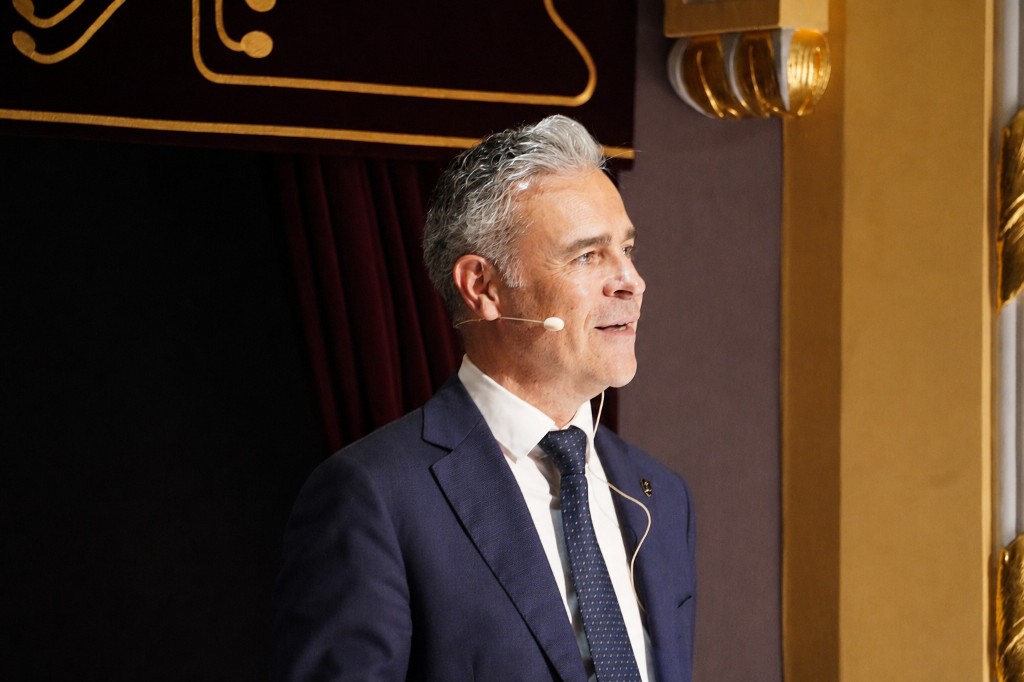
“Working with OHH! Italy reminded me why I chose this craft. We did not build events — we built moments, the kind that stay with you. I met people who believe, as I do, that true luxury is naturalness, and that Italian hospitality is not something you describe: it is something you offer. It was a collaboration grounded in respect — for the land, for the guest, and for the rhythm of things. And when respect comes first, beauty takes care of itself.”