
Riviera dei Fiori · Liguria
The Secret Riviera
Historic villas, Mediterranean gardens and the forgotten elegance of Italy’s western Riviera.
Discover the architectural heritage of Sanremo, Bordighera and the Riviera dei Fiori through privately designed journeys connecting remarkable houses, coastal towns and gardens overlooking the Mediterranean.
The coast
Between the mountain and the sea.
From La Mortola, just before the French border, the shelf runs east: Ventimiglia above the Roia, then Bordighera, the smaller town of Ospedaletti, and Sanremo. The mountains come down close to the water. The winter houses occupy the ground between them — a south-facing terrace, a tower for the view, a garden able to keep palms through a mild winter.
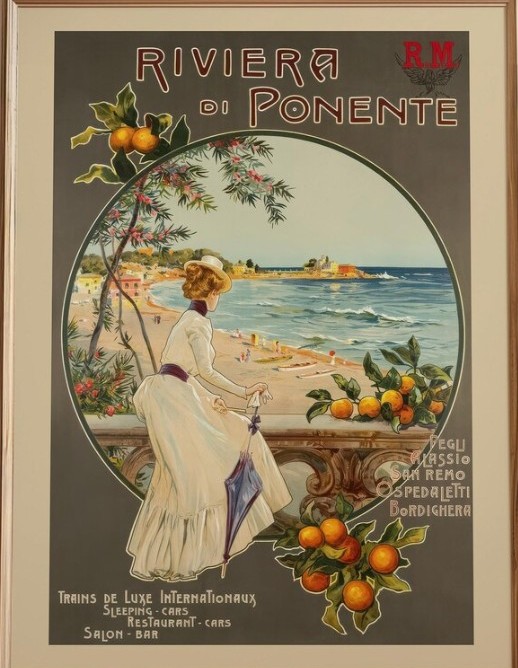
From the 1860s this was a winter coast for people who already knew Nice and Menton. Sanremo took the name Riviera dei Fiori from the flower trade, carnations and roses grown for market. Bordighera filled with houses commissioned from abroad. Charles Garnier, working from his own villa above Arziglia, set a pattern other architects repeated: a compact house, a slender tower, and a garden planted by someone who knew both the Mediterranean and the new exotic species. Ludwig Winter, the German gardener, worked here and at La Mortola.
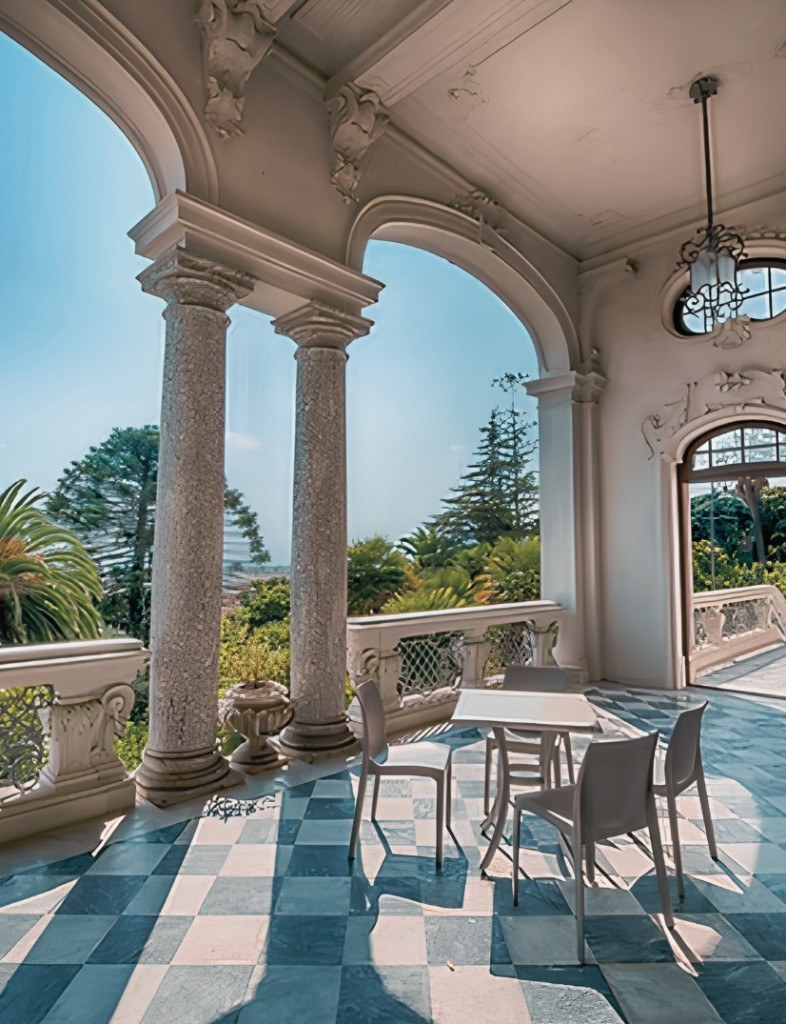
Most of what survives is eclectic building of the resort years, from the 1870s into the new century: slate mansards, iron crests, loggias, a Moorish or medieval quotation on a stucco facade. Liberty, the Italian Art Nouveau, comes later, in floral stucco and iron around the turn of the century. It is one layer on this coast. The name does not fit every villa.
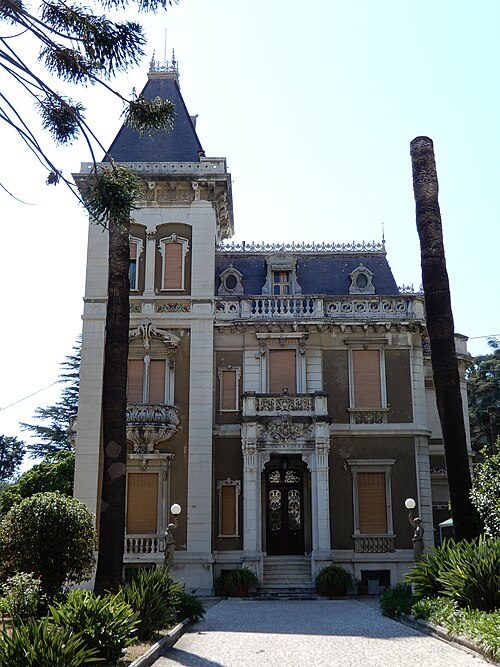
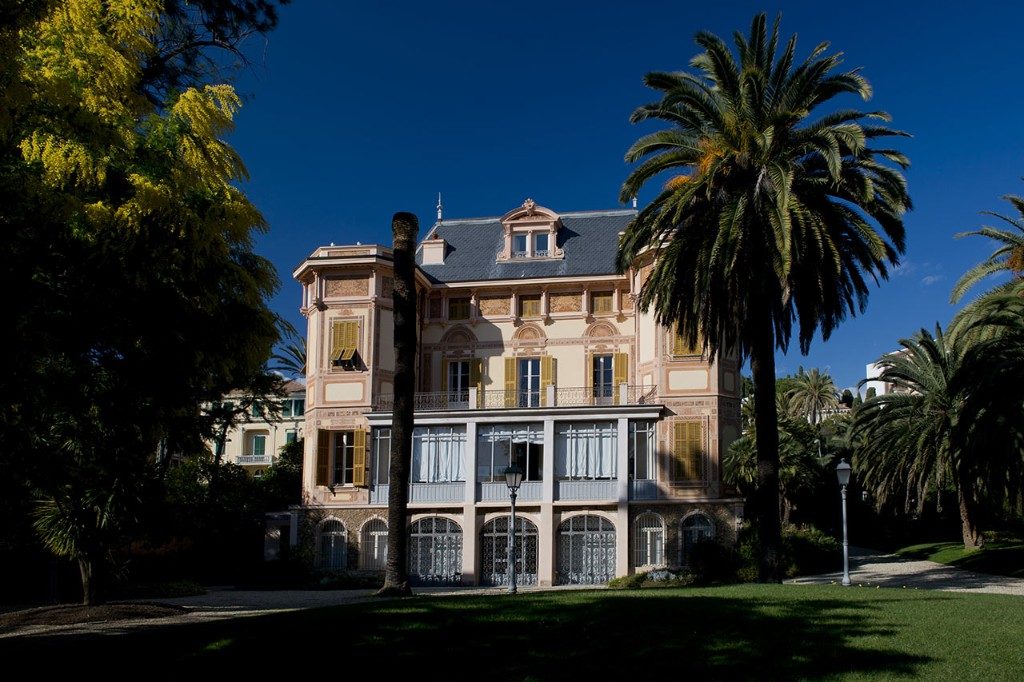
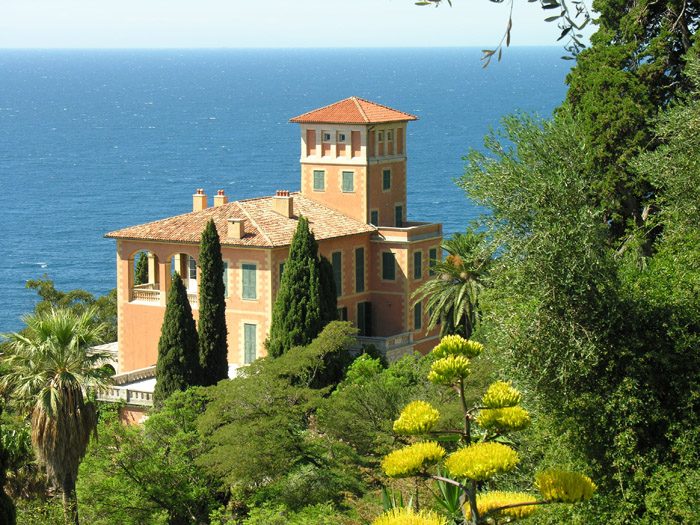
A tower, a mansard, a glazed winter room: the resort years left many houses of this kind. The olive-walled villa is one of them. It is not Villa del Sole, whose published views show a pale facade and blue-grey shutters.
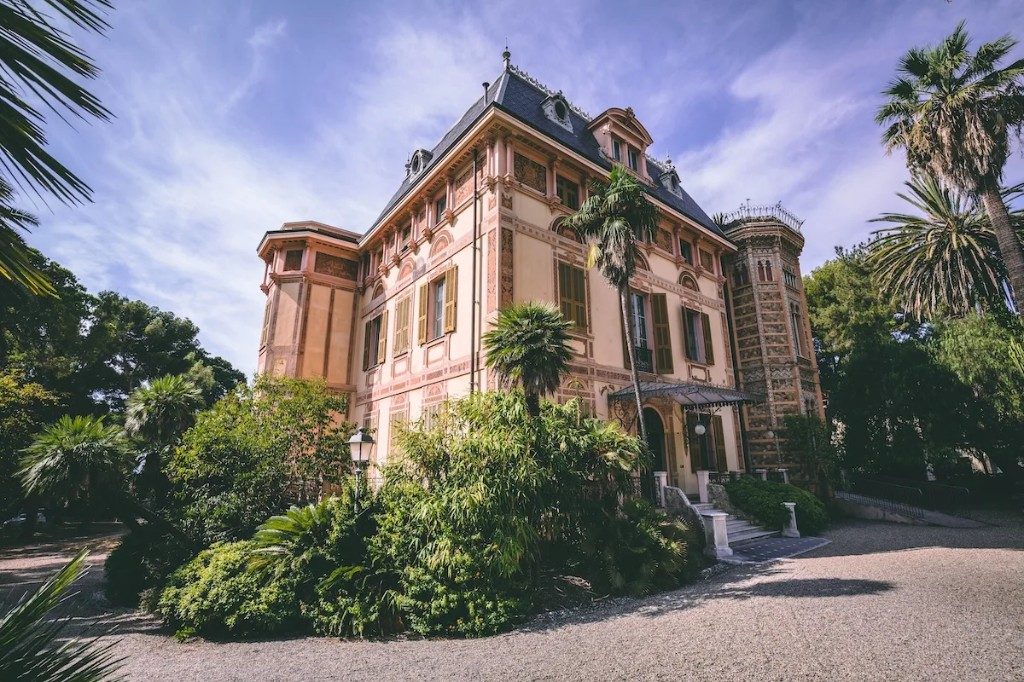
The glazed veranda is the winter room: a place to sit in the sun when the mountains behind the town are cold.
Houses
The Villas of the Riviera
An architectural legacy of winter residences, private gardens and European aristocratic life.
A few of these houses can be entered when they are open, or when a visit has been agreed. Others are private, and are read from the street. None is offered here as a villa to book.
Villa Nobel, Sanremo
Alfred Nobel lived here in his last years and died in Sanremo on 10 December 1896. The house is eclectic, with a Moorish tower, built and altered in the resort years and later adjusted by the local architect Pio Soli. It is a museum and a cultural centre, visited when it is open.
Villa Ormond, Sanremo
Built for the Swiss Michel Louis Ormond, to designs by Émile Réverdin, around the 1890s. The park, including a Japanese garden, is public. The villa is the seat of the International Institute of Humanitarian Law.
Villa del Sole, Sanremo
An eclectic house of 1898 by Pio Soli, on Via Val d’Olivi: a mansard, a slate roof, a lookout tower, with the richer decoration of those years. Later notes record the Duke Pietro d’Acquarone, minister of the Royal House, and occasional visits by Queen Elena. The garden has been described as a public park, and the house as a clerical residence. It is not proposed as accommodation.
Villa Etelinda, Bordighera
At 38 Via Romana, Charles Garnier designed a house for the Parisian banker Raphaël Bischoffsheim. Completed in the late 1870s, it was Villa Bischoffsheim. The garden is associated with Ludwig Winter. In 1896 Claude Bowes-Lyon, 13th Earl of Strathmore and Kinghorne, paternal grandfather of Queen Elizabeth The Queen Mother, renamed it Etelinda.
Queen Margherita of Savoy had stayed in 1879. In 1914 she bought the property, and then built a house of her own nearby. Bordighera’s local record also includes Louis Pasteur, and the young Elizabeth Bowes-Lyon, among people received here.
The house is private, and is seen from Via Romana.
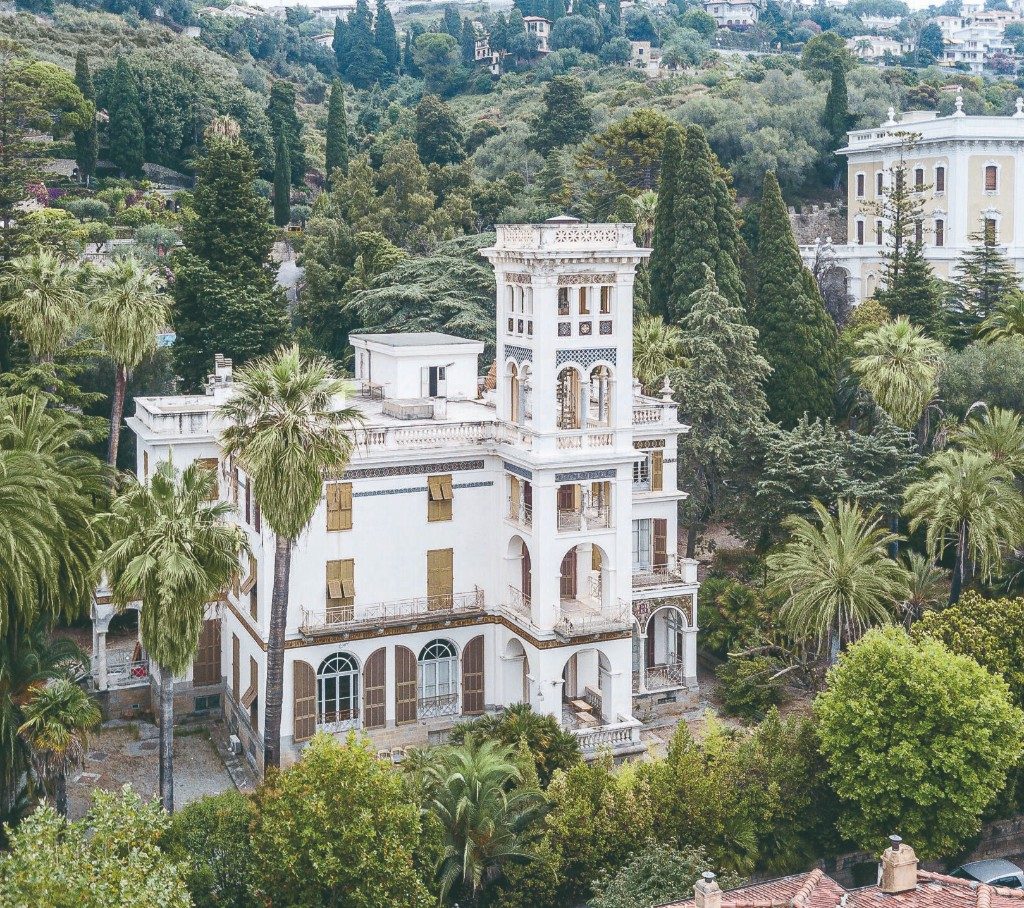
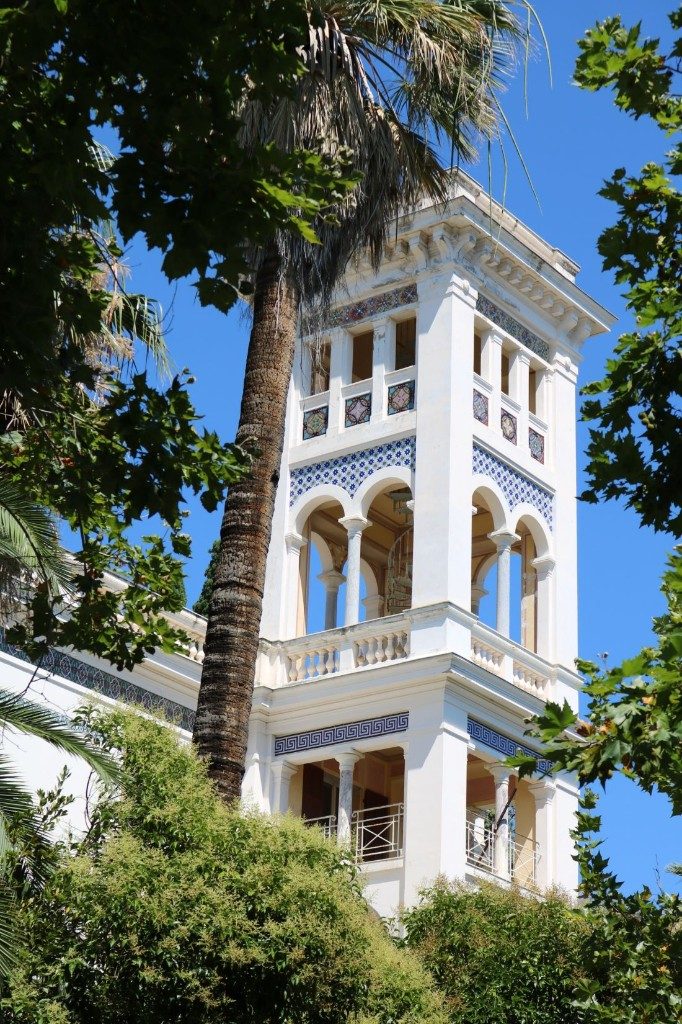
From the road the tower is the part one sees: arched loggias, a balustrade, blue majolica.
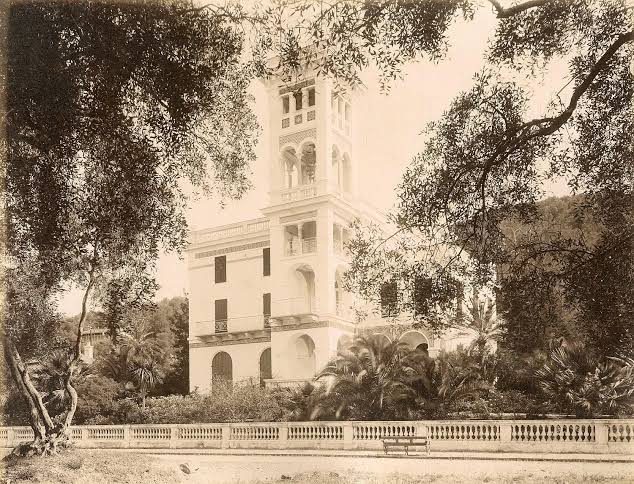
An early plate, from the years when the tower and the white facade were new and the garden had not yet closed around them.
Villa Garnier, Bordighera
Garnier’s own house, Via Garnier 11, built between 1871 and 1873 on a terrace above Arziglia. Three floors, an arched portico, and the slender tower he called his mirador. The garden, made with his son Christian and with Ludwig Winter, was a palm grove on terraces. Edmondo De Amicis called it a palace of palms.
A bust by Carpeaux and a column from the Tuileries still sit in what remains of it. The Sisters of St Joseph of Aosta keep the house as a holiday house. The frescoed ground floor, the chapel and the garden can be visited on request. The rooms are those of the guesthouse.
Villa Regina Margherita, Bordighera
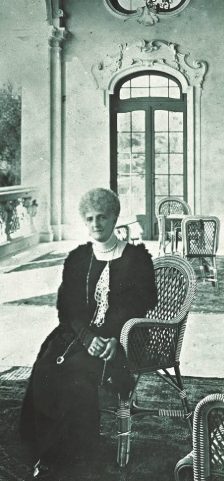
The queen’s own house on Via Romana, inaugurated on 25 February 1916. She spent long seasons in Bordighera and died there on 4 January 1926. The villa later passed to the association of families of the fallen, and in 2008 to the municipality and the province of Imperia. It has been a museum, and it has stood closed. Entry is not assumed. The house is not accommodation.
The photograph is Queen Margherita of Savoy, seated in a loggia. It is a portrait. It is not the villa, and it is not the monument.
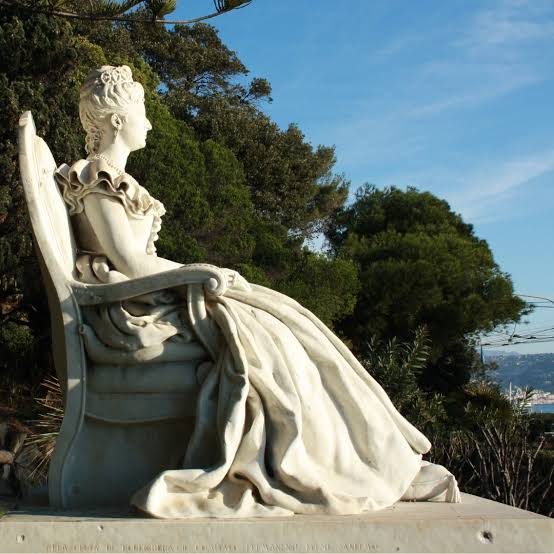
The marble is a different subject. Italo Griselli’s monument to the queen was commissioned in 1935 and inaugurated in 1940, at the foot of the pinewood of the Capo, near the church of Sant’Ampelio.
A winter colony
Sanremo’s Russian Heritage
The Church of Christ the Saviour stands at Via Luigi Nuvoloni 2. It was consecrated on 23 December 1913, a date the parish still counts as 10 December. Empress Maria Alexandrovna, who wintered on this coast, had wanted a Russian church here. The seafront promenade still carries her title, Passeggiata Imperatrice. She died in 1880. The building belongs to the next generation.
In 1910 a committee under Grand Duke Sergei Mikhailovich was authorised by Nicholas II, who was among the donors. Alexey Shchusev drew the sketch from the religious architecture of seventeenth-century Moscow — a cube, kokoshniki, five domes — and did not come to Sanremo. The working project and the site were directed by the local engineer Pietro Agosti. The first stone was laid on 9 December 1912. The dedication includes Saint Catherine and Saint Seraphim of Sarov.
The parish history and the University of Genoa’s FOSCA record also place the sarcophagi of the Montenegrin royal house here. The remains of King Nicholas I and members of his family were transferred to Cetinje in 1989. Queen Elena of Italy was his daughter. The church is a working parish. The festival, the cycle race and the flower market belong to other decades of the same town.
Four towns
Sanremo, Bordighera, Ospedaletti, Ventimiglia.
Sanremo
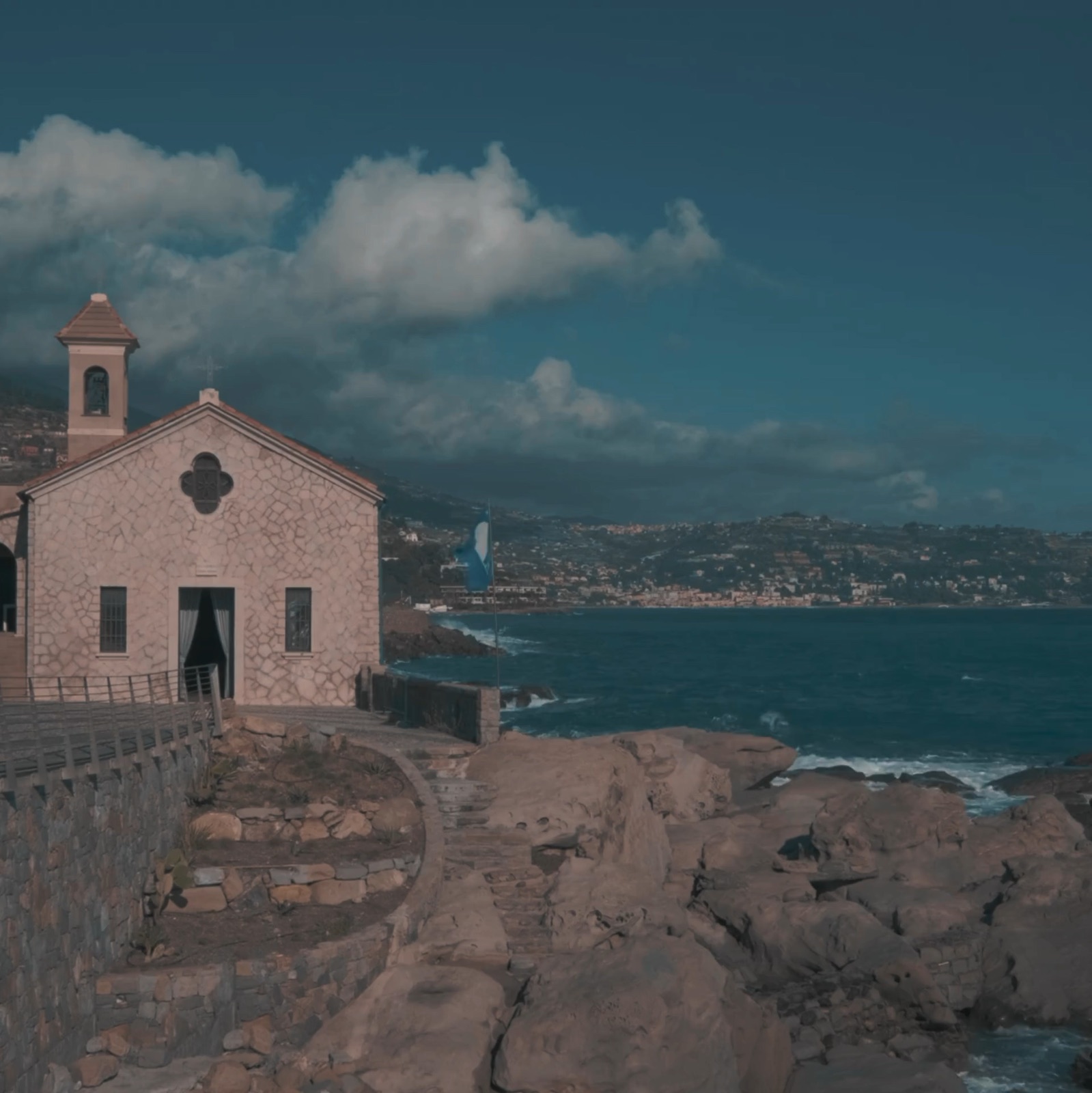
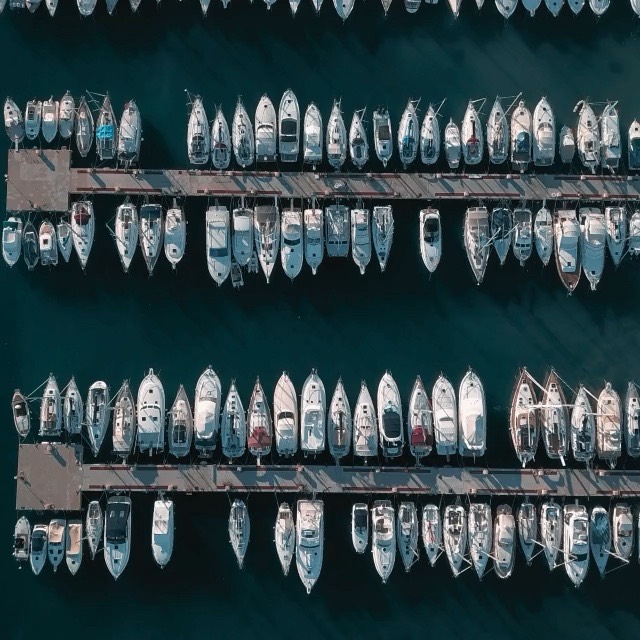
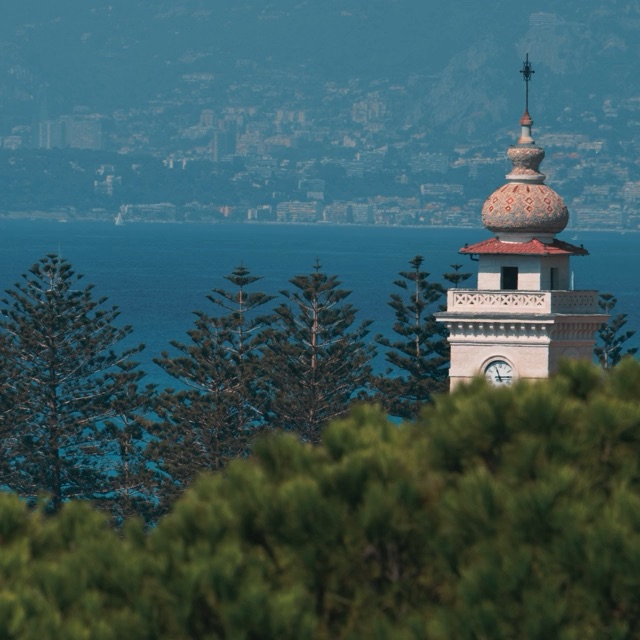
The public city is La Pigna, the sanctuary of the Madonna della Costa above it, the casino, the music festival, the Milan–Sanremo. The villa walk is different: Corso Imperatrice along the water, and the roads toward the older hillside houses. The film at the top of this page is the town from the harbour, with the sanctuary on the ridge. The film here is the harbour from above.
Ospedaletti
The comune between Sanremo and Bordighera. A shorter promenade, and a smaller winter resort. In a journey it is the town between the other two.
Bordighera
Bordighera is the villa hill. Via Romana runs for about a kilometre and a half above the centre, with Etelinda, the Bicknell museum and Villa Regina Margherita along it. In 1884 Claude Monet spent three months here and painted that road. Lower down, Sant’Ampelio marks the cape.
Ventimiglia
The high town stands above the Roia. West of the modern city, at Mortola Inferiore, the Hanbury gardens occupy the cape before the border. Menton is the next town. Monaco follows when the journey is written that way. The distances are short, and crossing the border is a decision about the day.
The cape
Cypress, palms, and a terrace toward the sea.
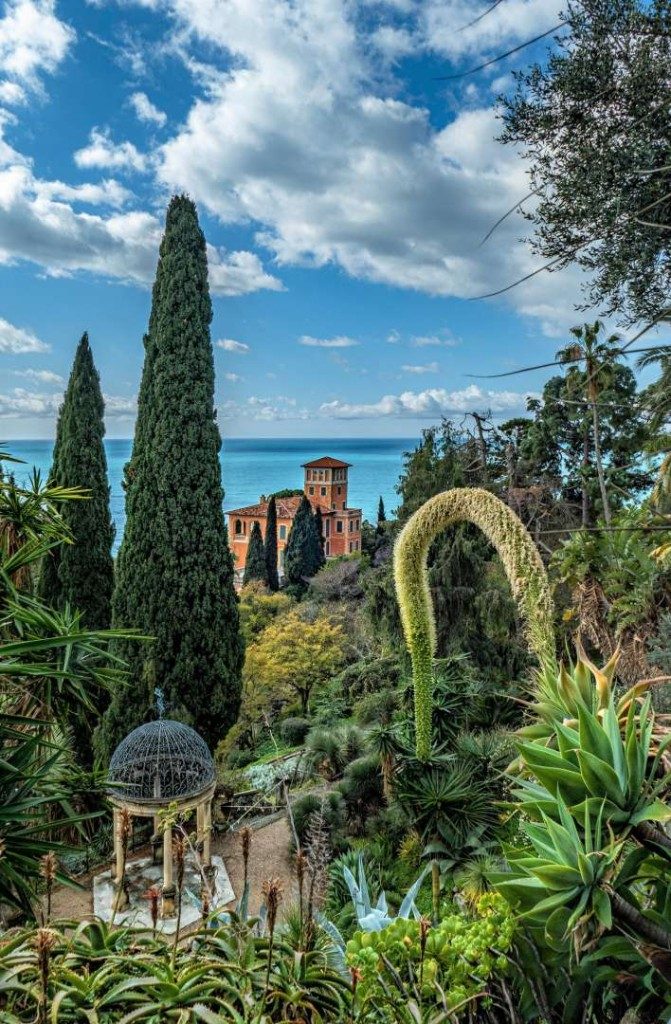
At La Mortola, Thomas Hanbury bought the old Palazzo Orengo and its farmland in 1867. His brother Daniel, a botanist, shaped the scientific idea of the garden. Ludwig Winter did much of the planting. Cypress walks were already on the property. The palace gained a marble loggia toward the sea, and the tower was raised. The University of Genoa now runs the Giardini Botanici Hanbury. The garden is visited with a ticket. The palace belongs to the garden. It is not a hotel.
On Via Romana 39 in Bordighera, Clarence Bicknell’s museum and library opened in 1888. It was the institution of the British winter residents, and it is also a seat of the International Institute of Ligurian Studies. The same decades produced the Russian church in Sanremo. Here the record is a library, a herbarium and a museum.
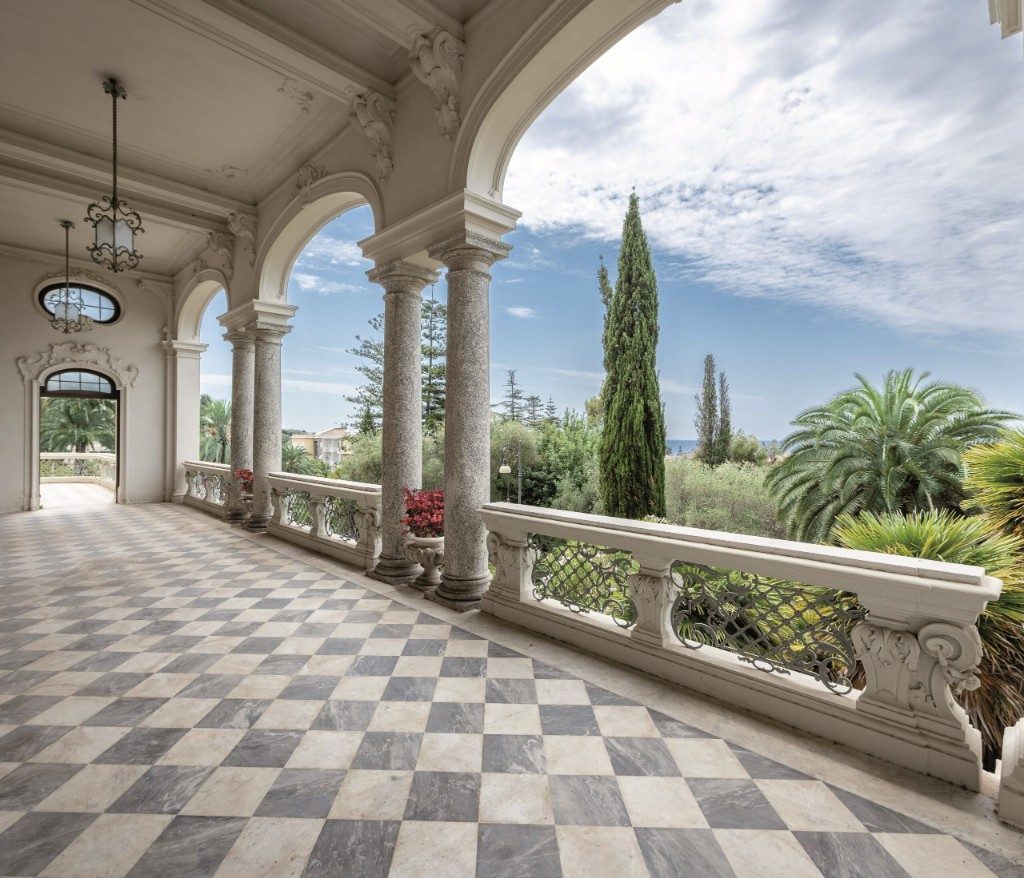
The terrace is the other architecture of this coast: a floor toward the water, a balustrade, the town as a line below.
The week
The Riviera, Privately Explored
A journey along the Riviera dei Fiori can bring together historic villas, botanical gardens, architectural walks and coastal towns, with each day arranged around the places that can genuinely be visited.
OHH! ITALY coordinates private transportation, knowledgeable local guides, selected accommodation and dining arrangements. Visits to privately held properties are considered individually and remain subject to permission and availability.
The journey may continue west towards Menton, Monaco and the French Riviera, creating a wider Mediterranean itinerary.
From the street, Via Romana shows the exterior of Etelinda, the Bicknell museum when it is open, and Villa Regina Margherita as a building whose door may be closed. Villa Nobel is visited when the museum is open. The ground floor of Villa Garnier is visited when a visit has been agreed. The Hanbury gardens take half a day on the cape. A car can run from Sanremo through Ospedaletti and Bordighera to Mortola. A boat leaves a local harbour when a boat is free and the sea allows it.
The night
Royal Hotel Sanremo
Corso Imperatrice 80. A hotel since 1872, still operating, and a member of Leading Hotels of the World. The seawater pool in the park is a 1948 design by Gio Ponti. The 1872 building belongs to the earlier resort years, before Liberty. Its architecture is part of the coast’s history of hospitality.
A stay here is a hotel arrangement, subject to availability, and is separate from the houses above. Those are museums, institutions, private houses, or a religious guesthouse. They are not offered as villas to book. When a private house is free for a given date, it is proposed in correspondence, not listed here in advance. A journey that uses the hotel is arranged through OHH! ITALY.
Enquire
Written from the enquiry.
OHH! ITALY designs the journey: which house is entered, which is seen from the road, where the night is, and whether the day continues past the border. One enquiry covers the arrangements.