
OHH! ITALY Journal
Where the Water Leads
Inside the hidden canyons of the Dolomites with Christian Cavallin.
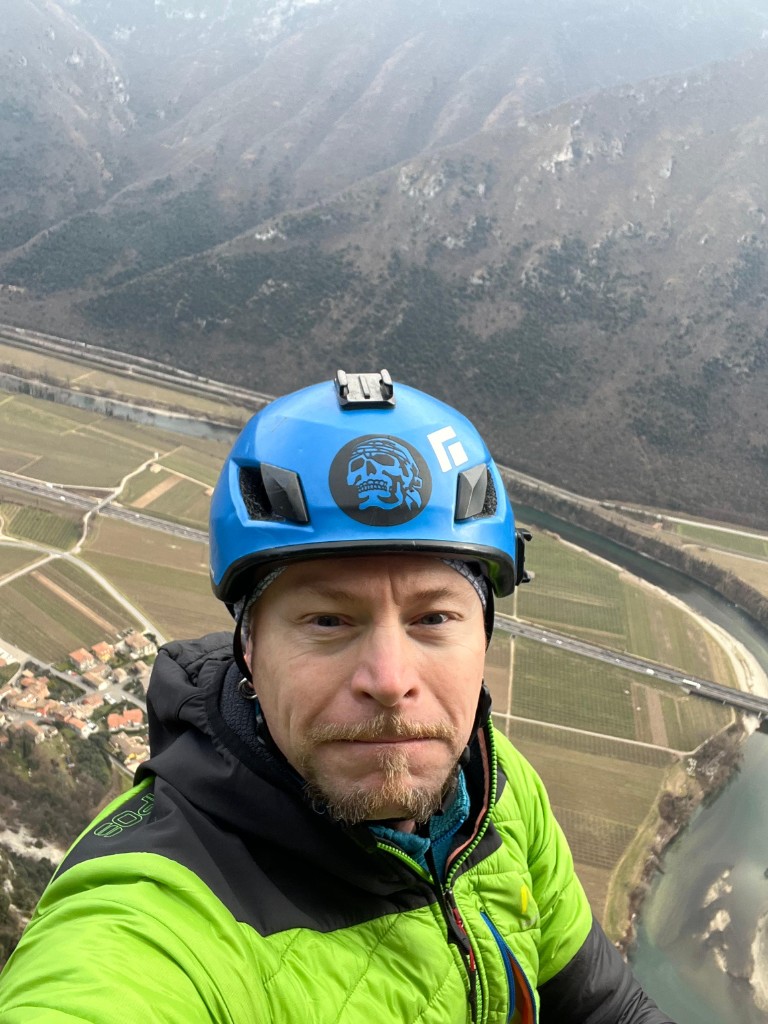
Some places between the Dolomites and Friuli never appear on the ordinary route. Water has cut passages too narrow for a casual glance from the road — canyons where daylight arrives late, and the rock asks for attention before it offers anything back.
This is the landscape Christian Cavallin works in, as a canyoning guide and the founder of Canyoning Bastards.
OHH! ITALY speaks with him about how craft and human care make these hidden environments shareable — not as spectacle, but as a carefully held encounter.
How did your path into the mountains and outdoor sports begin?
My professional path in outdoor sport began about twelve to fifteen years ago, when I became a sport-climbing instructor — my first true activity in this field. I still do that work, and I collaborate at the Sportler Climbing Center in Treviso.
From there, over the years, I was fortunate to move toward mountaineering and rock climbing thanks to a mountain guide and canyoning guide with whom I now work as a partner. He introduced me not only to alpinism and rock climbing, but also to canyoning, asking me to assist him when he was accompanying larger groups. During those outings he noticed my natural way of welcoming guests, a visceral attention to safety, and a gentle way of relating to people. He said to me: “Why don’t you take the course to become a guide?” At first I answered that I thought I was too old — but he believed in it before I did. I followed his advice and completed a long training of nearly nine hundred hours over four years to obtain the official title of canyoning guide.


Through the water — the route continues.
What was the real impulse that made you want to become a canyoning guide?
The real push came from the indescribable emotion I felt every time I entered a canyon. When I found myself immersed in these wonderful, hidden places, I thought at once that marvels of this kind should not remain a privilege for a few experts. I wanted to give access to that beauty also to people without technical skills or extensive athletic preparation. I wanted to become a guide precisely in order to accompany ordinary people, in complete safety, into these spectacular places — allowing anyone to live an experience they otherwise could never have had.
When someone faces a first jump, a rope descent, cold water, or a closed gorge — how do you think about fear and safety?
Entering a canyon — or walking on fresh snow — often means leaving your comfort zone. Some people are facing a jump, a rope descent, or an isolated slope for the first time. My main aim is to make every person feel completely safe. When the guest perceives the fullest technical attention and care for the details, the anxiety vanishes.
“Safety doesn’t limit the fun. It is what makes it possible.”
On rope — attention before motion.
Once that sense of safety is there — what happens to the group?
At that point empathy takes over. I like to create a group, to laugh, to joke, and to let people live an experience tied to pure carefree enjoyment and fun.

Shared motion in the gorge.
When the canyoning season ends, where does the work go?
While the dream of becoming a guide was taking shape, I decided to create Canyoning Bastards, specialising in guided canyon and gorge experiences in the Dolomites and Friuli.
At the same time, as someone who has always loved trekking, I earned the qualification of Environmental Hiking Guide (GAE) with a specialisation in snow environments. So when winter closes the canyoning season, I take people to explore remote, almost fairytale corners of the Dolomites: truly wild places, beyond phone coverage, where you can meet the winter mountain in its most authentic form.
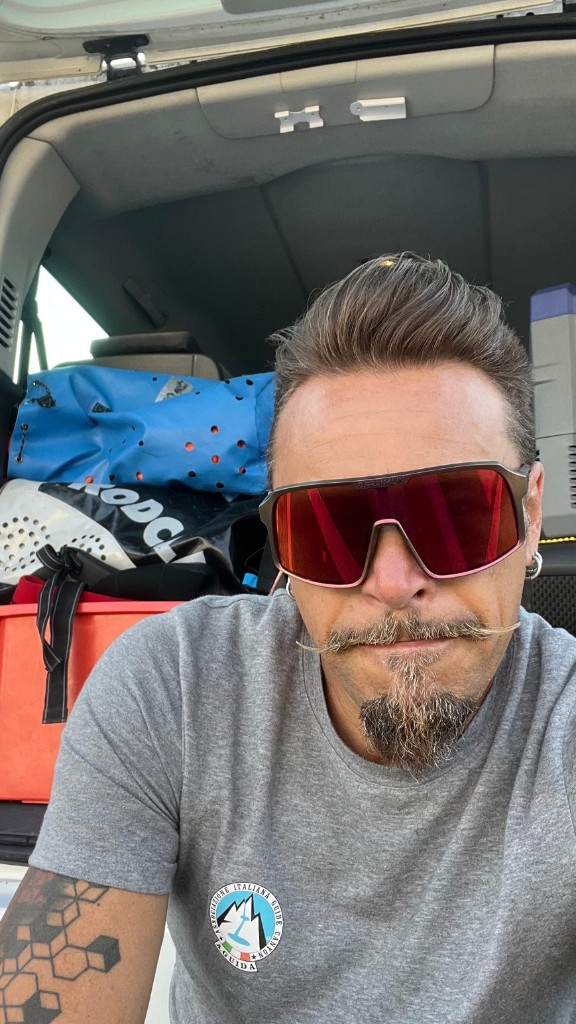
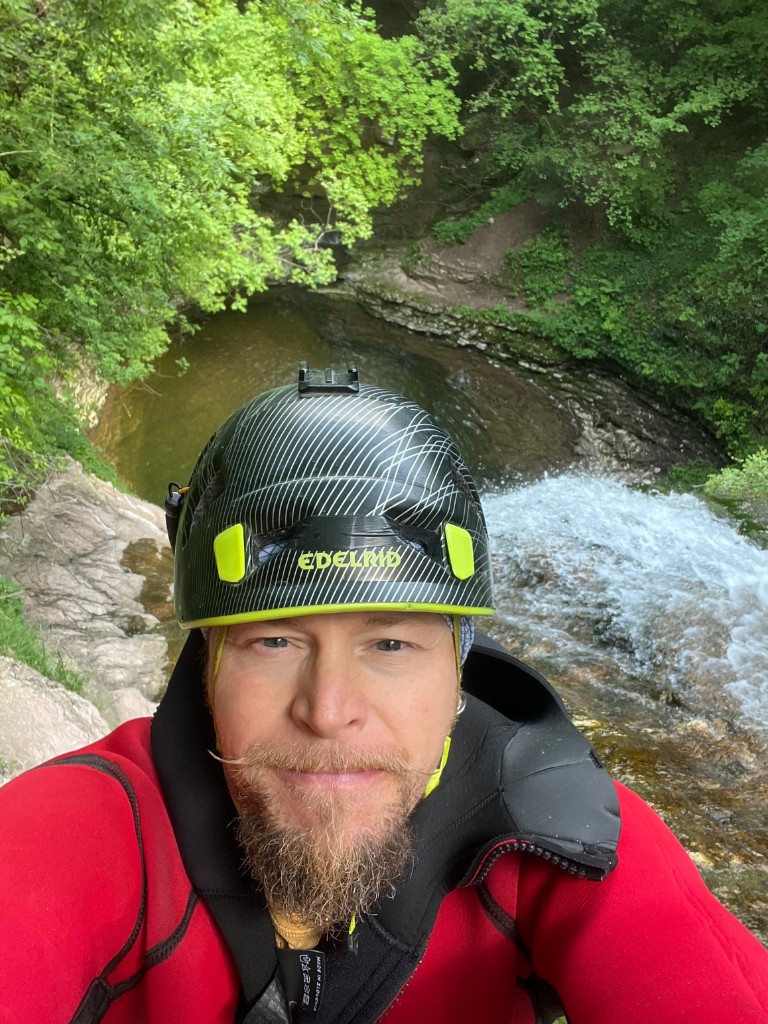
OHH! ITALY has established a collaboration with Christian Cavallin / Canyoning Bastards for clients seeking a more adventurous dimension within their journey. Christian brings specialist outdoor knowledge, technical preparation, safety and human confidence. OHH! integrates that specialist dimension into the wider journey when it belongs — according to the people travelling, the season, and the geography.
Somewhere between a checked harness and a quiet pool, the wild remains wild — and becomes, briefly, shareable.