
Private journeys
Lucca
Palaces, gardens and life within the walls.
Discover Lucca’s historic centre, its musical heritage and the villas of the surrounding countryside, with a stay planned around your interests.
The city
A city within Renaissance walls.
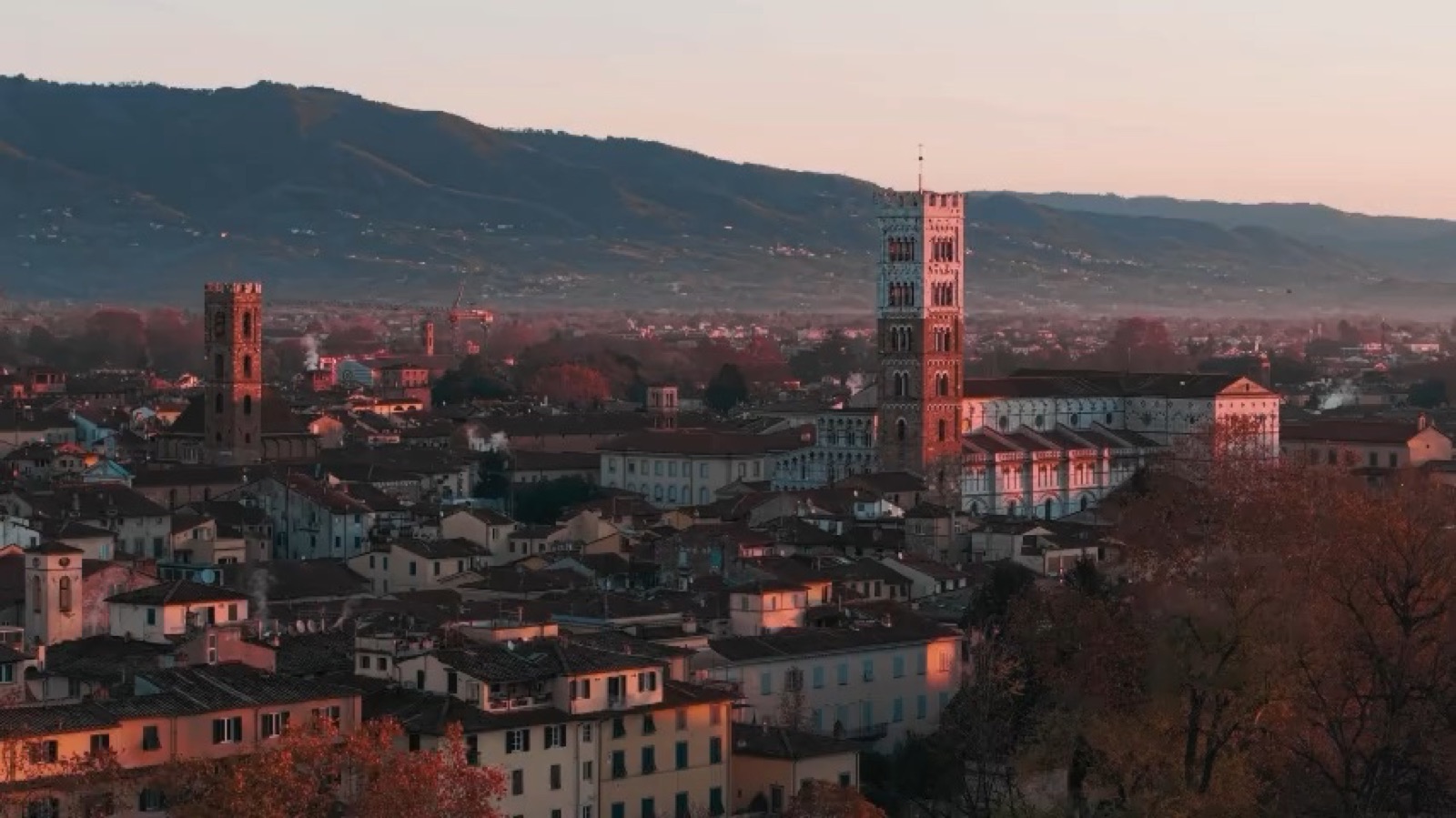
Lucca lies in the plain of the Serchio, with the Apuan Alps to the west and the Pizzorne hills to the northeast. The Roman colony was founded in 180 BC. Via Fillungo follows the line of the cardo, the main north–south street, and San Michele in Foro stands where the forum was.
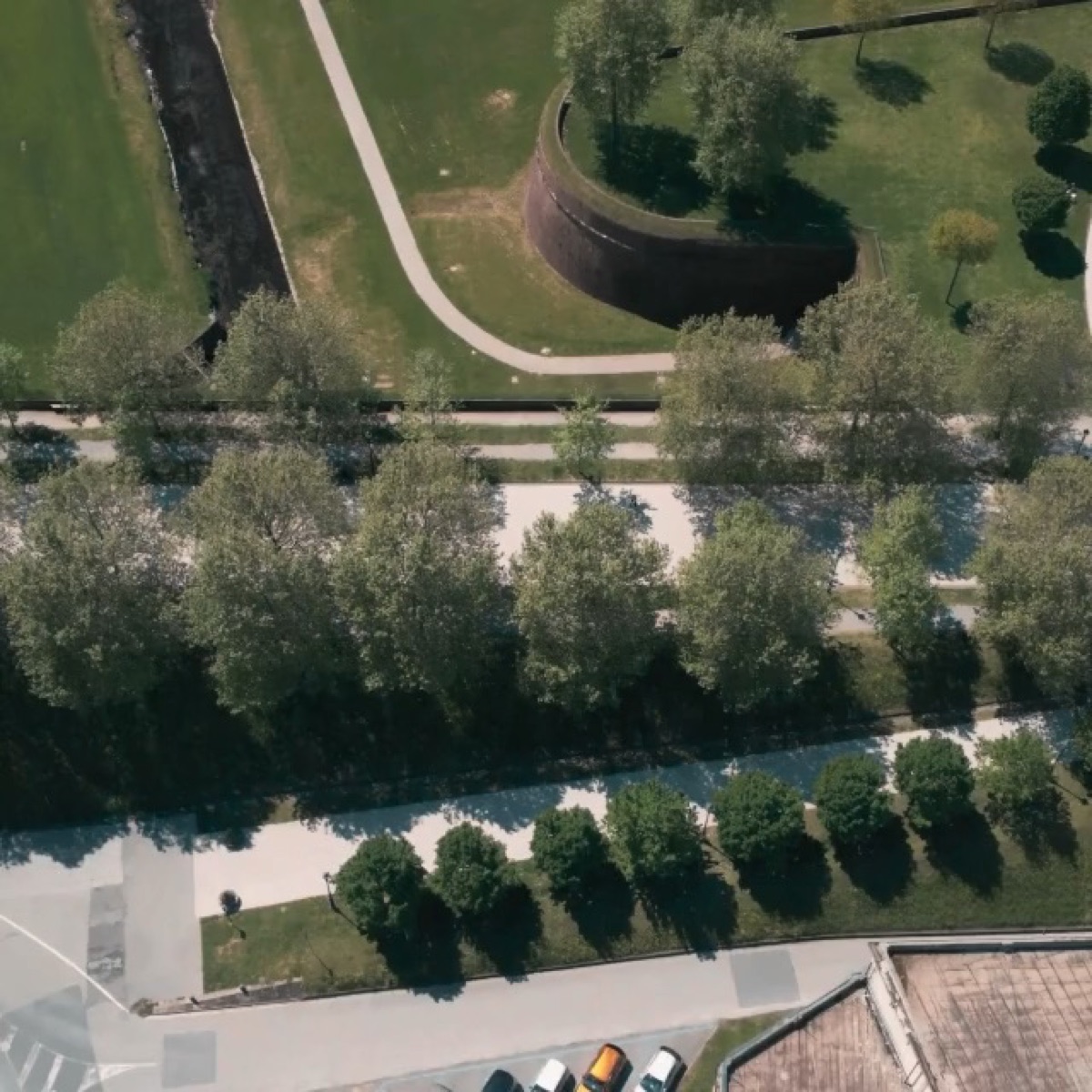
What defines the city now is the Renaissance circuit of walls, built from the first half of the sixteenth century into the middle of the seventeenth, when artillery had made the medieval towers obsolete. The tree-lined promenade extends for just over four kilometres around the historic centre.
Lucca remained a republic long after most Tuscan cities had a prince. That independence ended in 1799. Elisa Bonaparte Baciocchi, Napoleon’s sister, ruled as Princess of Lucca, and after her Maria Luisa of Bourbon. The city’s palaces and surrounding villas reflect its history as an independent republic and its later transformation under princely rule.
Inside the walls
Lucca’s palaces and gardens.
Palazzo Pfanner
Against the northern walls, on Via degli Asili, Palazzo Pfanner’s Baroque transformation began under the Moriconi and continued under the Controni, a family of silk merchants who acquired it in the late seventeenth century. The garden, laid out in the early eighteenth century and attributed to Filippo Juvarra, is a small Italian parterre: lemon trees in pots, a line of statues, a fountain, and the bastion rising behind it. In the mid-nineteenth century Felix Pfanner, a brewer from Austria, established his brewery in the garden and the cellars, and later bought the palace. His descendant Pietro Pfanner, a surgeon and mayor of Lucca from 1920 to 1922, left the medical instruments shown with the rooms.
Palazzo Mansi
Palazzo Mansi, on Via Galli Tassi, was the city palace of the Mansi, a Lucchese family of silk merchants. Older tower-houses were brought together on the site and bought in 1616 by Ascanio Mansi. Between 1686 and 1691 Raffaello Mansi had the piano nobile remodelled in the Baroque style by the Lucchese architect Raffaello Mazzanti. The palace is now the Museo Nazionale di Palazzo Mansi: the residence, with much of its furniture and a set of Brussels tapestries, and a picture gallery of the sixteenth to eighteenth centuries.
Palazzo Ducale
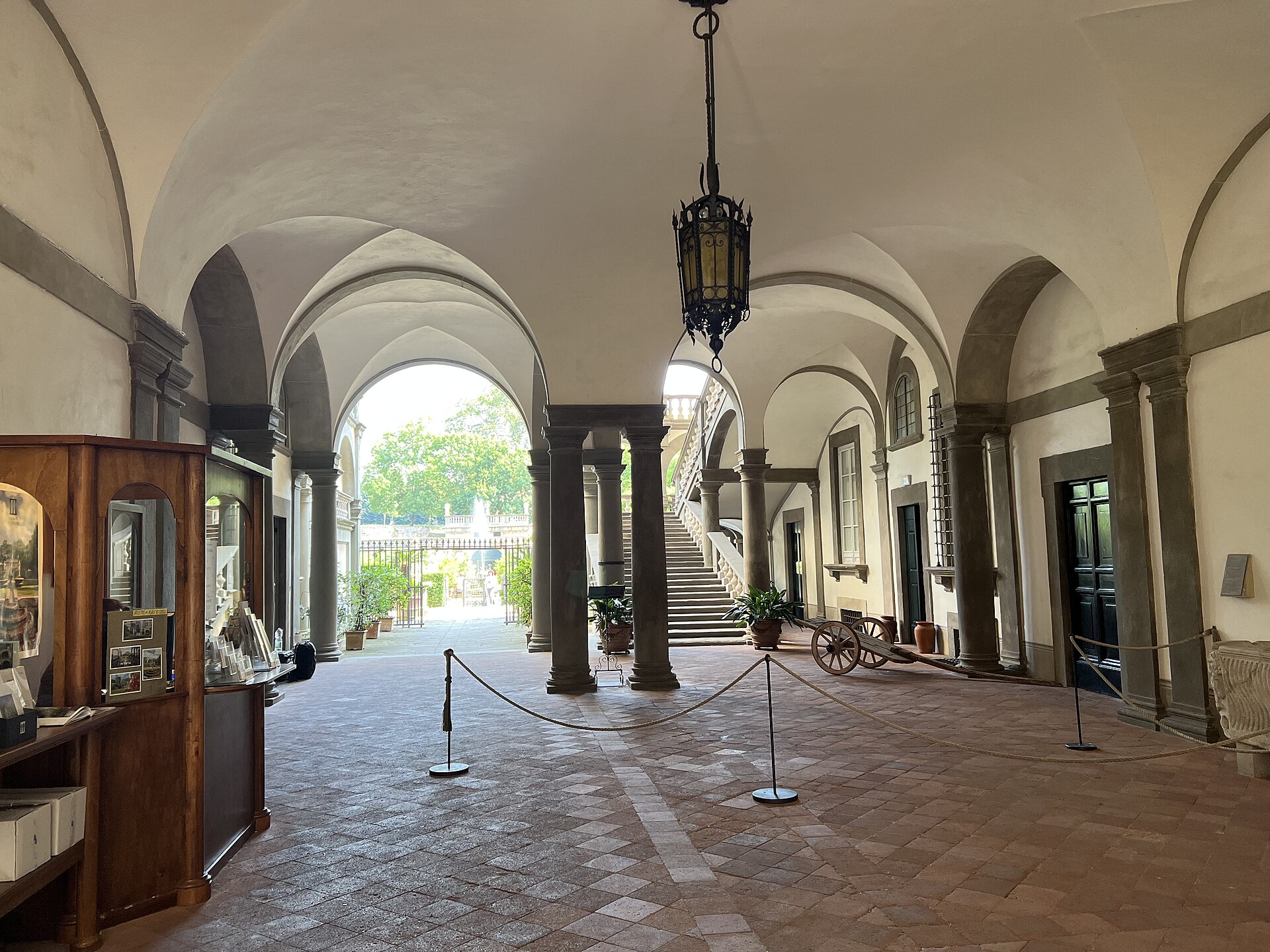
The palace on Piazza Napoleone is Lucca’s historic seat of government. The republic kept it for the Anziani after Castruccio Castracani’s fortress was demolished around 1370. Visitors can still see two courtyards: the Cortile degli Svizzeri, named for the republic’s Swiss guard and closed on one side by Bartolomeo Ammannati’s loggia, and the Cortile Carrara, linked to it by the neoclassical carriage passage Lorenzo Nottolini built for Maria Luisa of Bourbon. Elisa Bonaparte opened the square in front of the palace. The Province of Lucca now uses the building, and some rooms host exhibitions. The courtyards open onto the square.
Palazzo Guinigi and the Torre Guinigi
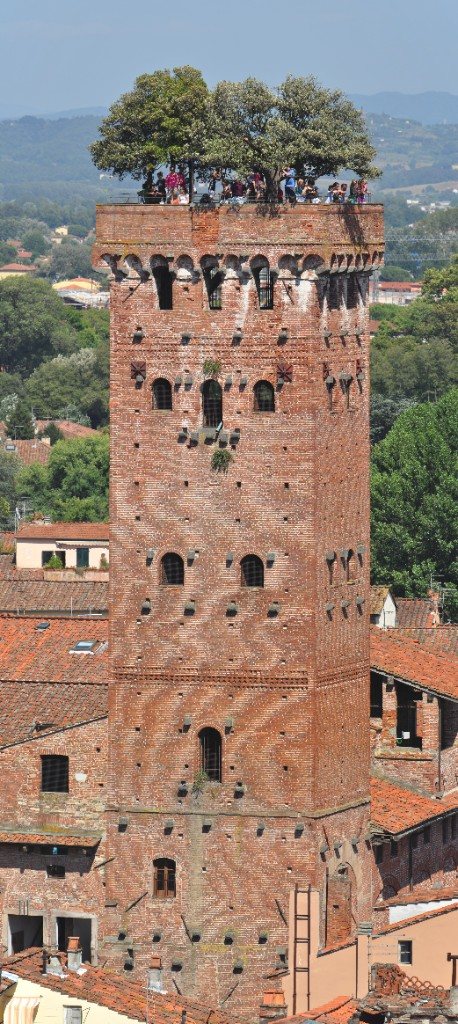
The Guinigi came closest to turning the republic into a signoria. Paolo Guinigi ruled Lucca from 1400 to 1430. Their medieval palace stands on Via Guinigi. The Torre Guinigi, on Via Sant’Andrea, is the fourteenth-century tower with holm oaks growing from the roof garden. From the top, the circuit of the walls and the plain beyond are both in view. Villa Guinigi, farther east, houses the Museo Nazionale di Villa Guinigi. Its rooms, in Paolo Guinigi’s former residence, show archaeological finds and works of art from Lucca and its territory, from antiquity to the eighteenth century.
Villa Bottini
Inside the eastern walls, on Via Elisa, Villa Bottini was built for the Buonvisi in 1566 and is also known as Villa Buonvisi al Giardino. Elisa Bonaparte acquired it in the early nineteenth century. It later passed through the Bottini family to the Comune, which uses it for exhibitions.
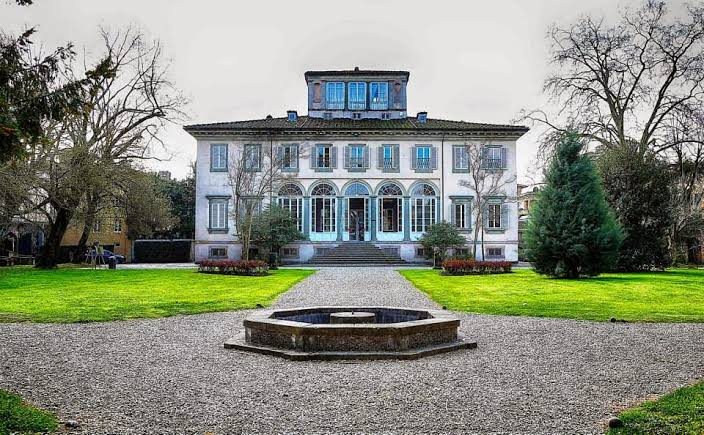
Palazzo Bernardini
Palazzo Bernardini, on Piazza Bernardini, is a late-Renaissance palace built for the family in the sixteenth century. It remains a private house on the square.
The Lucchesia
Villas in the surrounding countryside.
Outside the gates the same families built villas on the plain and on the first hills. Marlia, Segromigno and Camigliano lie a few kilometres apart, northeast of the city. Vicopelago is immediately to the south. Opening dates and access arrangements vary by property and are checked when planning your visit.
Villa Reale di Marlia
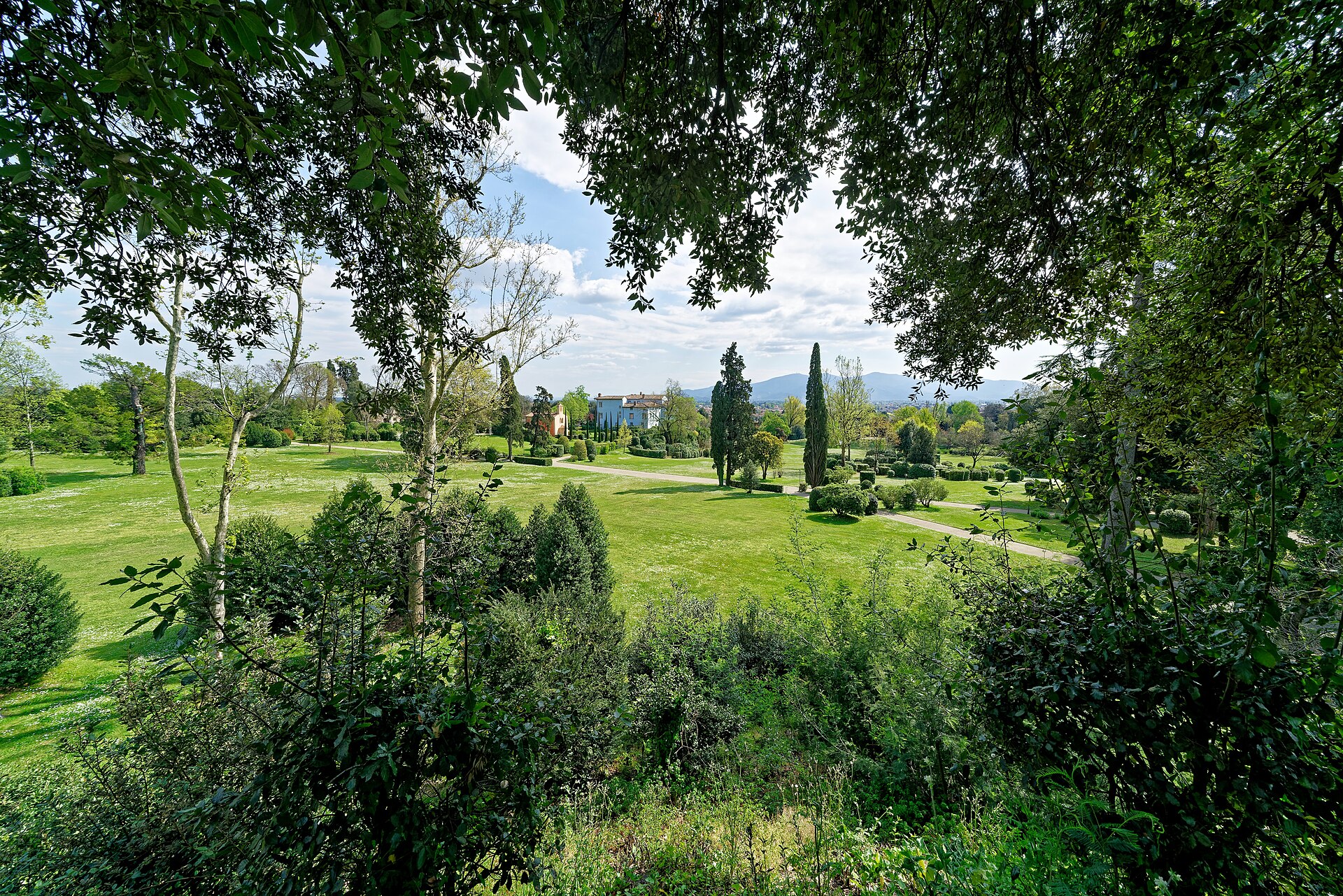
In Marlia, a hamlet of Capannori, the Orsetti bought the estate in 1651 and remade the park: avenues, a lemon garden, and the green theatre planted between 1664 and 1670. In 1806 Elisa Bonaparte Baciocchi gave the old house a neoclassical front and took in the neighbouring bishop’s villa, with its sixteenth-century nymphaeum. From 1923 the Pecci-Blunt asked Jacques Greber to add woodland and a lake around those older gardens. Since 2015 the park and the house have been restored and opened to visitors.
Villa Torrigiani, Camigliano
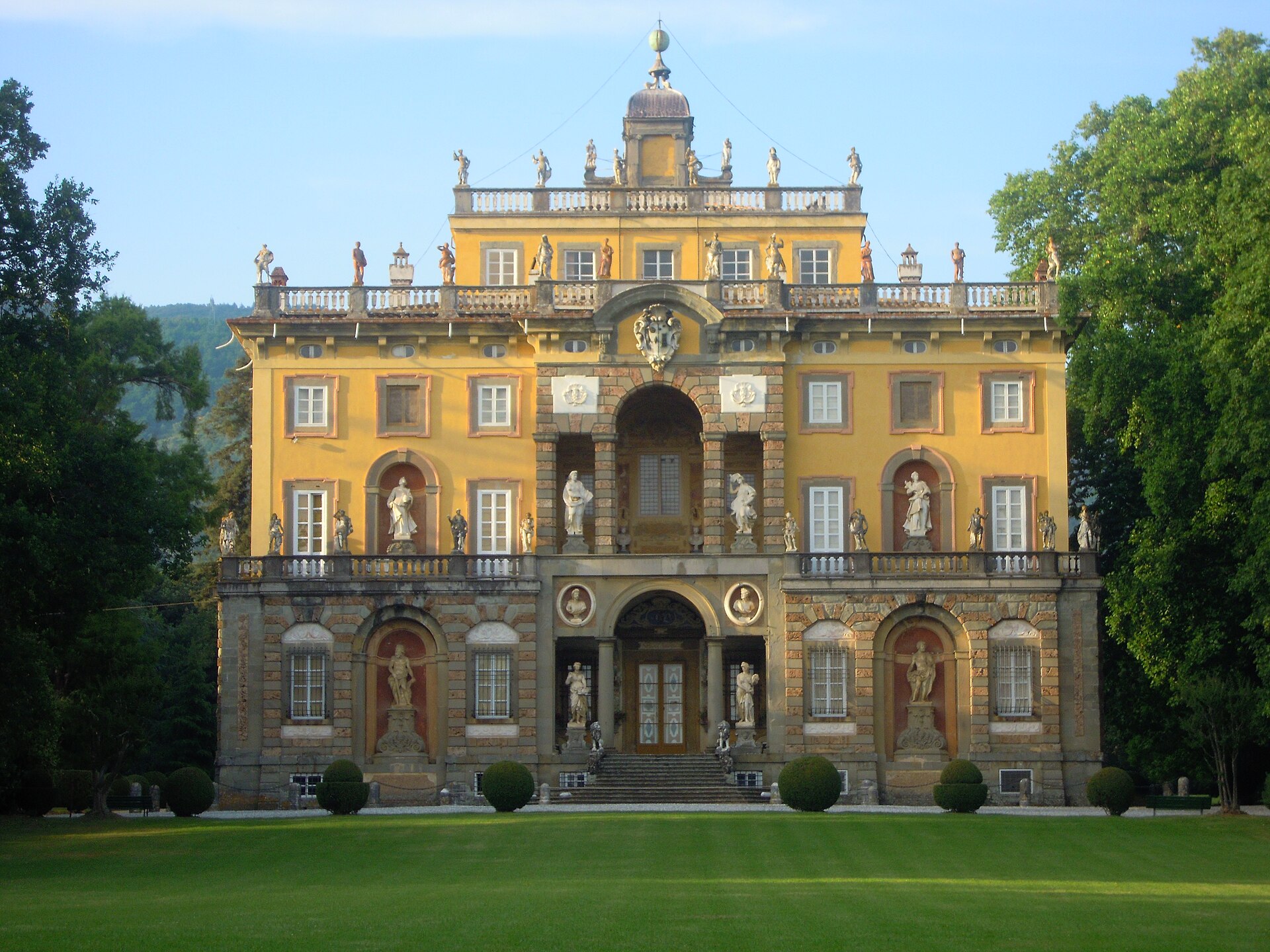
At Camigliano, Villa Torrigiani began as a Buonvisi country house in the sixteenth century. In 1651 it passed to Nicolao Santini, the republic’s ambassador at the court of Louis XIV, who gave it the palace front, the Garden of Flora, a nymphaeum and the water games. In 1816 the property came to the Torrigiani, who laid out the romantic park and the cypress avenue that approaches the house.
Villa Mansi, Segromigno in Monte
Villa Mansi stands at Segromigno in Monte. The Cenami bought the estate in 1599, and in 1634–35 Muzio Oddi gave the house its light facade, with a double stair and a central portico. The Mansi, silk merchants, acquired it in 1675. Filippo Juvarra redesigned the garden for them in the early eighteenth century. The present garden is a nineteenth-century landscape of lawn and trees, and it still includes the older fishpond and its statues.
Villa Grabau, San Pancrazio
Villa Grabau, at San Pancrazio, stands on the road to Matraia, north of the city toward the hills. The Diodati held it from the early sixteenth century, and a Renaissance loggia remains from their time. The Cittadella gave it the neoclassical form it still has. In 1868 it was bought by Rodolfo Schwartze, husband of Carolina Grabau, and it is still in the family. Carolina’s planting, made with the botanic garden of Lucca, remains in the park.
Villa Oliva, San Pancrazio
Villa Oliva, also at San Pancrazio, is a Buonvisi house, with a two-storey loggia of monolithic columns in stone from Matraia. A document of 1593 records the house. The park, with its terraces, cypress walk and grotto, is open to the public.
Villa Bernardini, Vicopelago
Villa Bernardini, at Vicopelago, was built in 1615 for Bernardino Bernardini, ambassador of the republic, and has stayed in the family. Behind the house, a green theatre of box was cut into the slope in the mid-eighteenth century for Marianna Parenzi. A guided visit, by reservation, takes about an hour, and the house remains a family home.
The same family names appear on both sides of the walls: the Mansi on Via Galli Tassi and at Segromigno, the Bernardini on Piazza Bernardini and at Vicopelago, the Buonvisi at Villa Bottini and at Villa Oliva.
Music
Puccini and Lucca’s musical heritage.
Giacomo Puccini
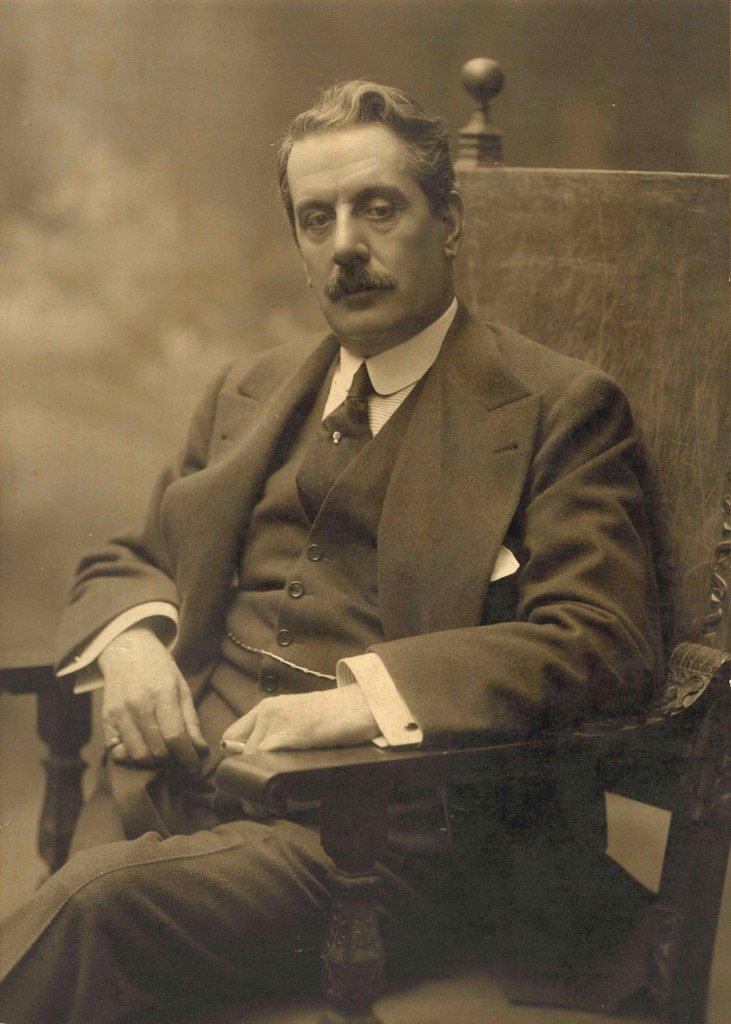
Giacomo Puccini was born in Lucca on 22 December 1858, in Corte San Lorenzo, off Via di Poggio, into a family of musicians at the cathedral of San Martino. The birthplace is a museum, and the summer festival of his operas is held at Torre del Lago, on Lake Massaciuccoli, beside the house where he lived, in the municipality of Viareggio.
Luigi Boccherini
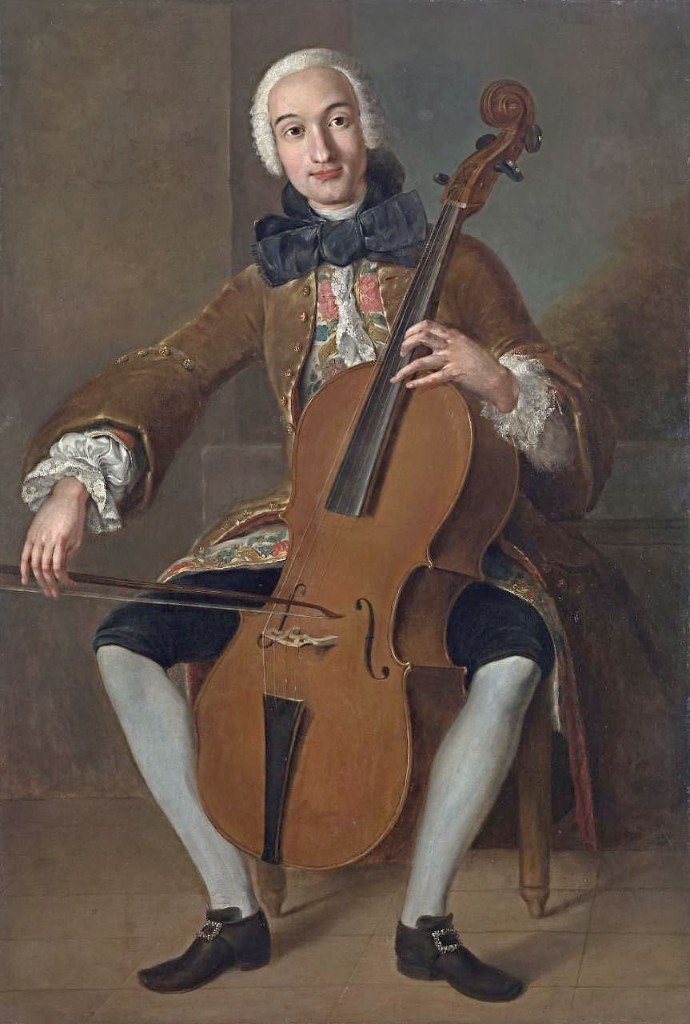
Luigi Boccherini was born in Lucca on 19 February 1743 and trained there as a cellist. His father, Leopoldo, played the double bass in the Cappella Palatina, and at thirteen Boccherini was already playing for the Santa Croce festivities. He made his career as a cellist and as a composer of chamber music, including years in the service of the Infante Don Luis in Spain. He died in Madrid in 1805. His remains were transferred to the church of San Francesco in Lucca in 1927.
Churches and the street
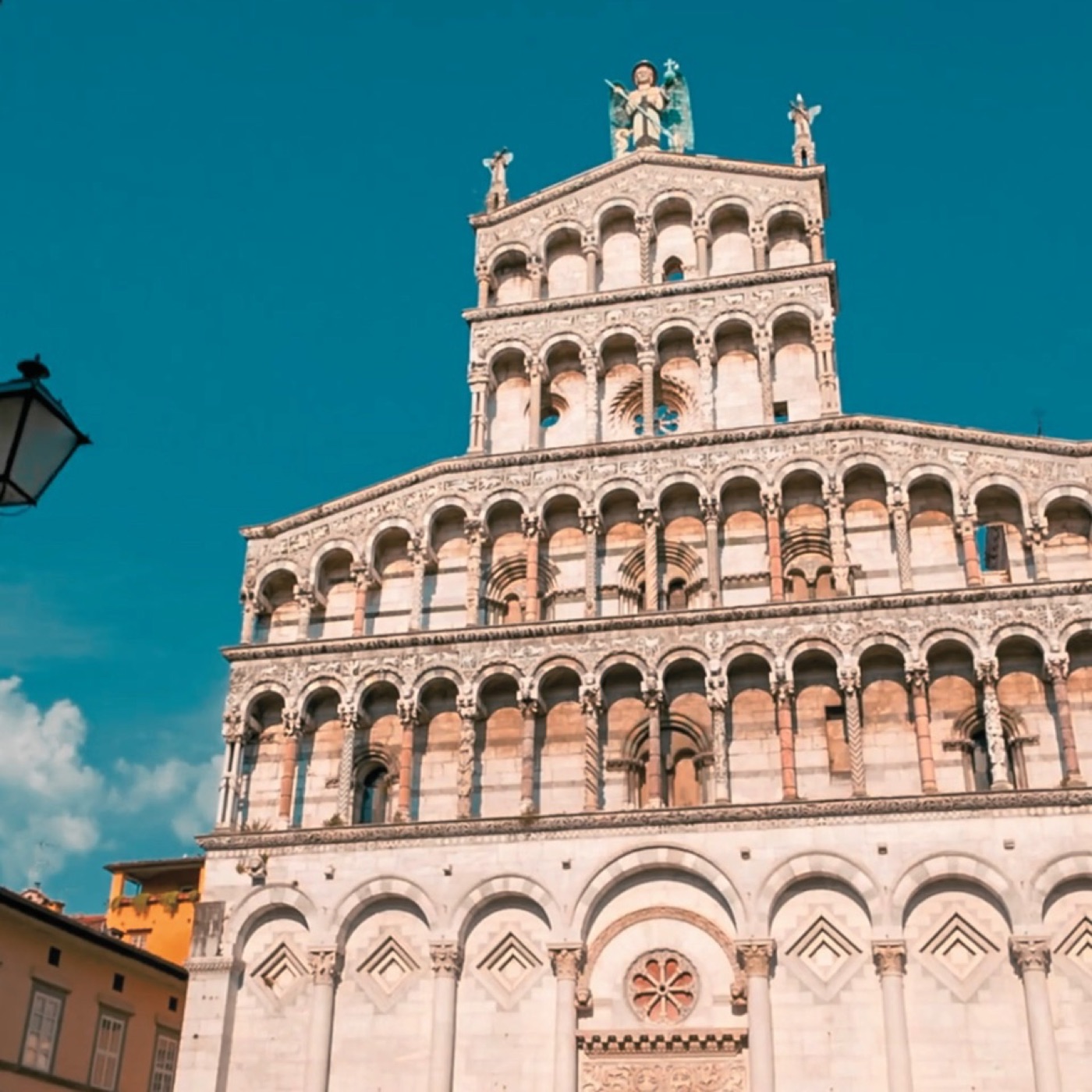
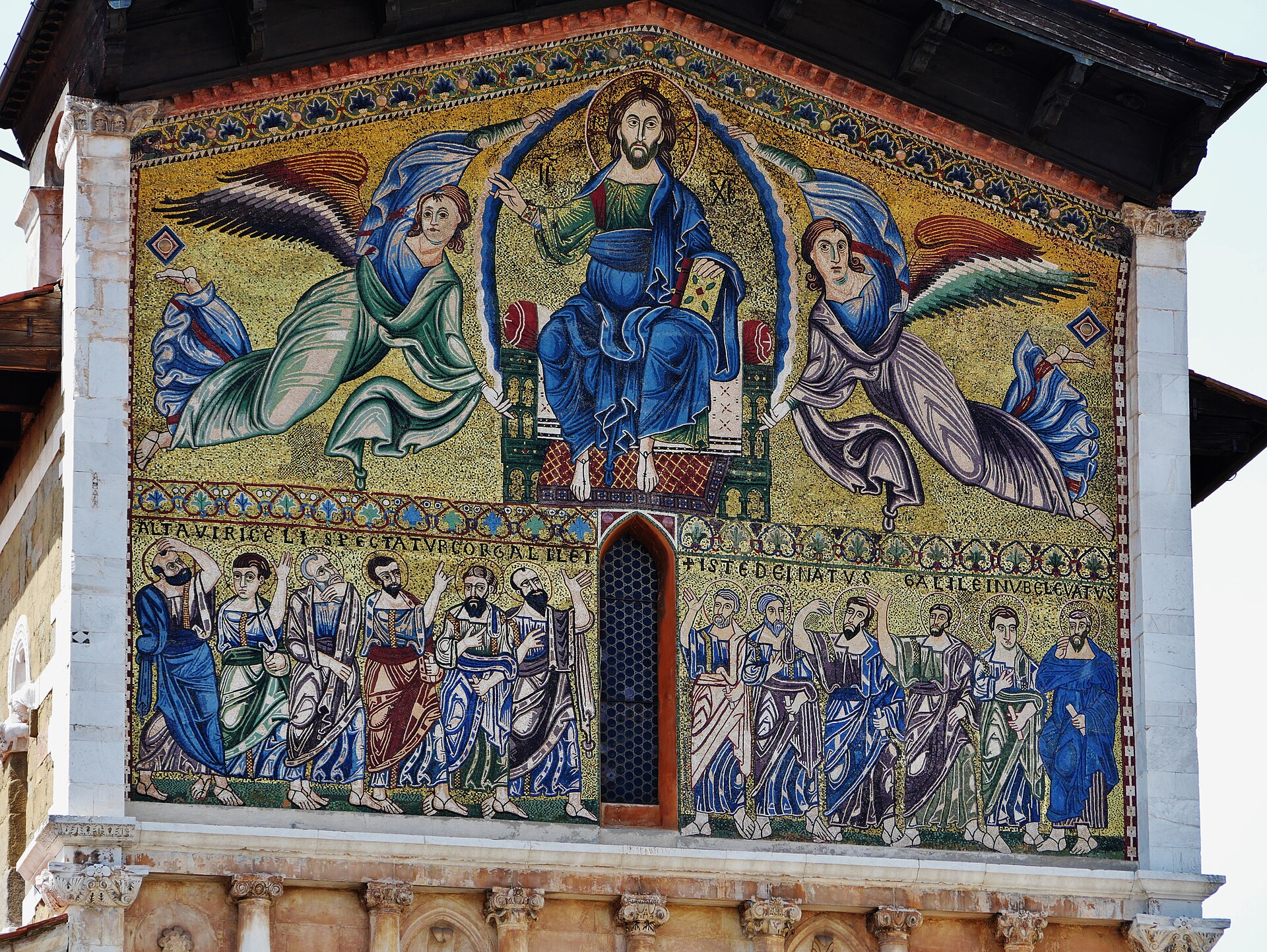
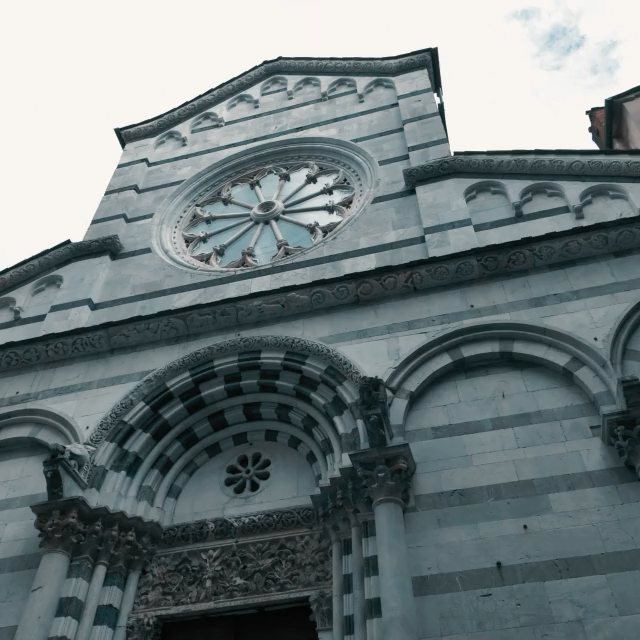
San Michele in Foro has a facade that rises as a screen, taller than the church behind it, crowded with inlaid columns and crowned by the archangel. It stands on the site of the Roman forum. The cathedral of San Martino houses the Volto Santo, the wooden crucifix central to Lucca’s religious history, and the tomb of Ilaria del Carretto, carved by Jacopo della Quercia in the first years of the fifteenth century. San Frediano, at the northern edge of the medieval city, carries a large mosaic of the Ascension across its facade. Via Fillungo runs from San Frediano toward the Roman centre, with shops and the facades of palaces along it.
Piazza dell’Anfiteatro
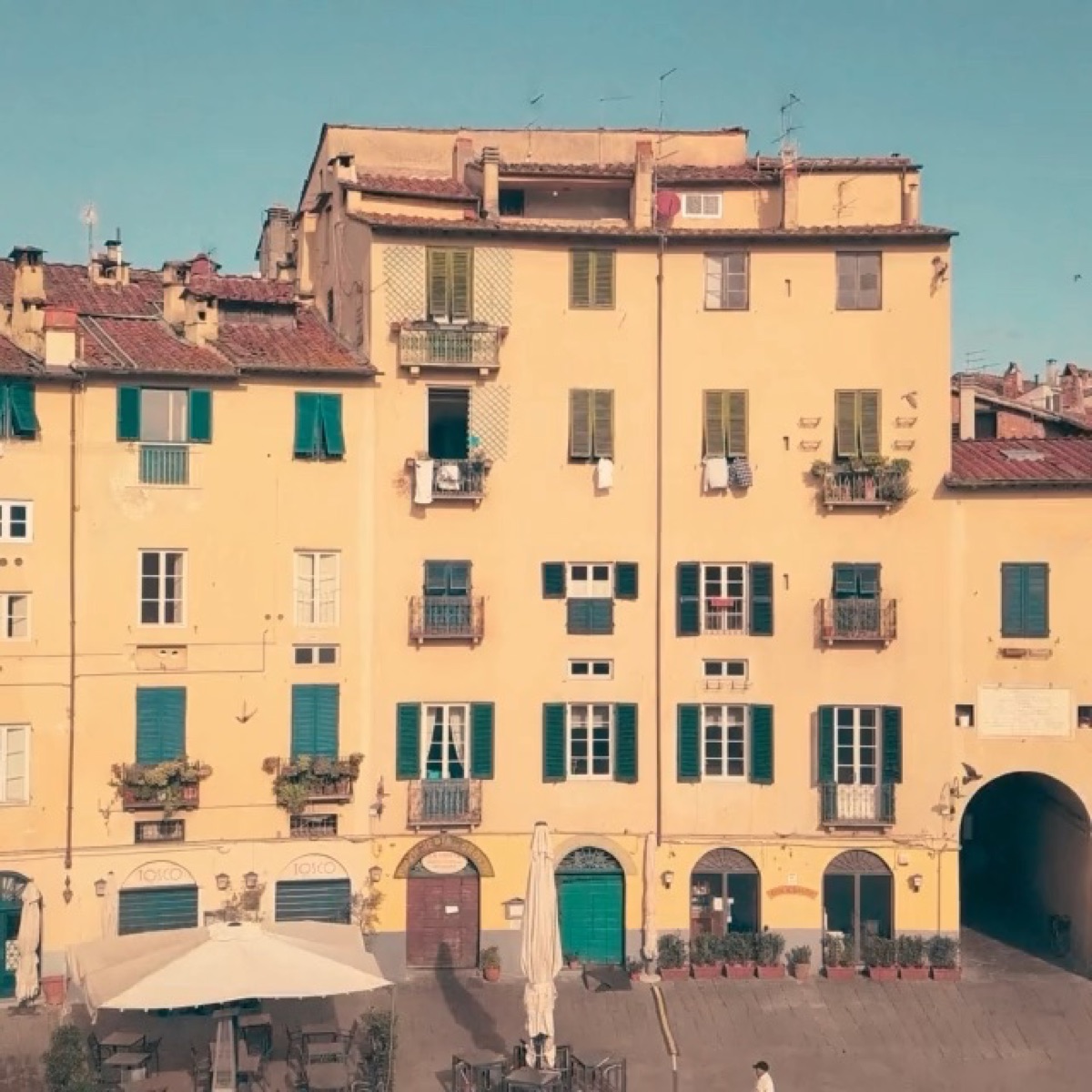
The amphitheatre is Roman, of the first or second century, and once stood outside the walls. Its plan is an ellipse. Medieval houses were built into the cavea, and for centuries the centre filled with further buildings, gardens and stores. In 1830 Carlo Ludovico of Bourbon, Duke of Lucca, commissioned Lorenzo Nottolini to clear that centre and open the ellipse as a square. The houses around the oval still follow the line of the Roman seating.
The surroundings
Beyond the city walls.
The Lucchesia is the territory of the old republic: the city, the plain where the villas stand, and the hills immediately around them.
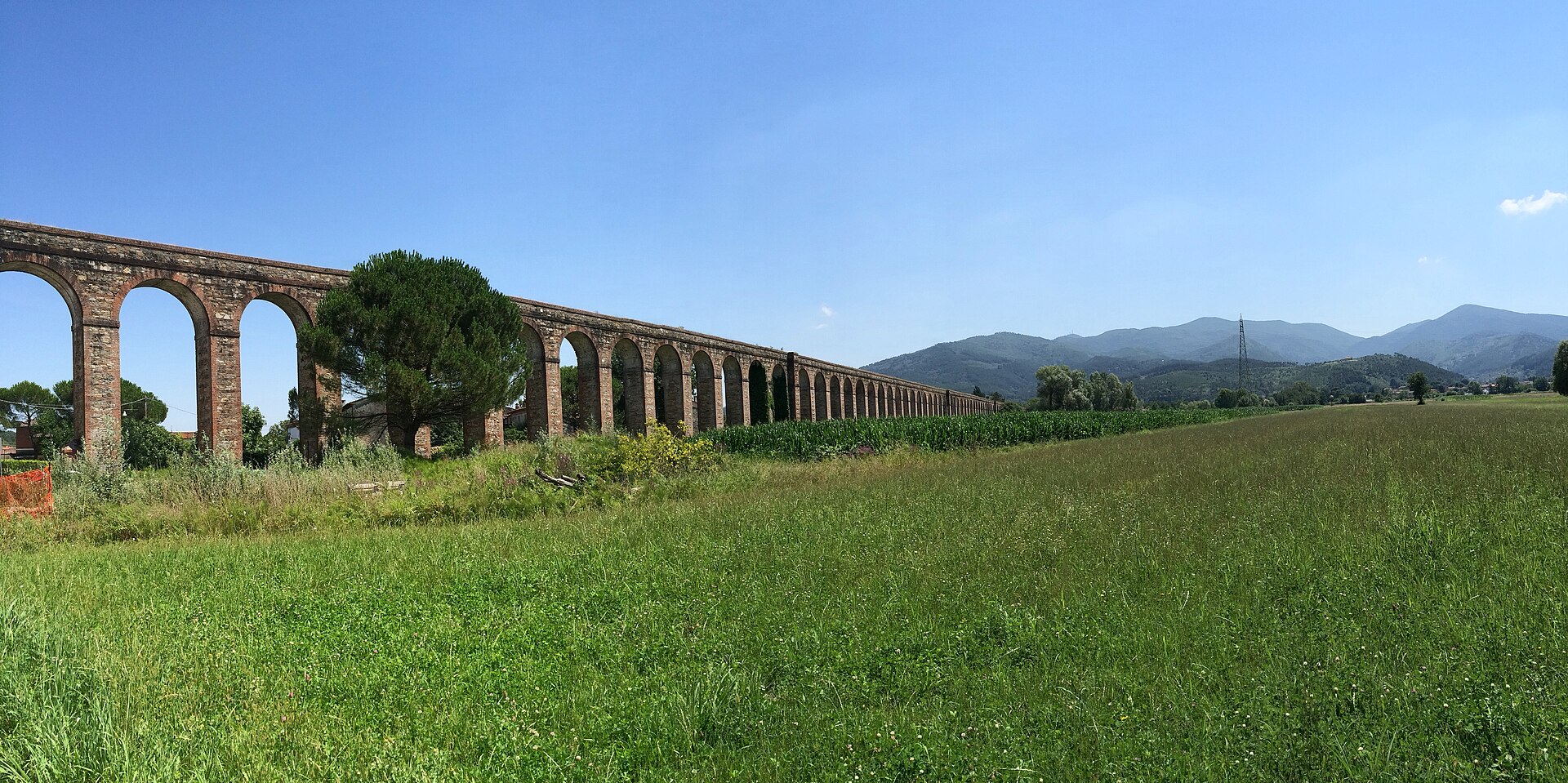
South of the walls, at San Concordio, a neoclassical temple marks the city end of Lorenzo Nottolini’s aqueduct. Maria Luisa of Bourbon ordered the work in 1822, and the arches were built over the following decades. They run about three kilometres south to Guamo, on the slopes of Monte Pisano, where a second temple collected the springs.
Northeast, the road to Matraia passes Villa Grabau and Villa Oliva and climbs toward the Pizzorne. To the east, a cypress avenue leads to Villa Torrigiani at Camigliano. The Apuan Alps remain on the western horizon. Torre del Lago, on Lake Massaciuccoli, is where the Puccini festival is held, toward the coast at Viareggio.
The stay
Planning your time in Lucca.
A stay in Lucca can combine guided walks through the historic centre, visits to palaces and gardens, and time in the surrounding countryside.
OHH! ITALY plans accommodation, visits and private transfers around your interests and the length of your stay. Opening arrangements and travel times are considered together, allowing time for meals and independent exploration.
Local cooking, olive oil and the wines of the Colline Lucchesi and Montecarlo can also form part of the itinerary. For opera enthusiasts, a performance at Torre del Lago may be included when it coincides with the festival programme.
Accommodation
Where to stay.
Stay within the historic centre for easy access to Lucca’s streets and squares, or choose accommodation outside the walls for gardens and more space. We help assess location, room arrangements and access according to the needs of your party.
Grand Universe Lucca
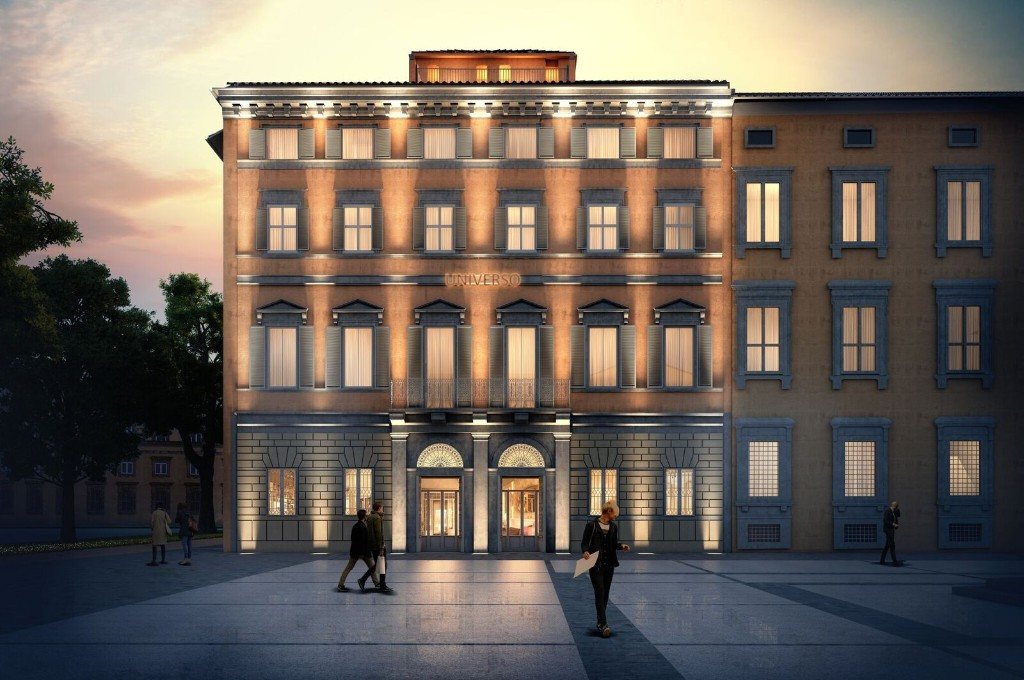
Grand Universe Lucca is a hotel in a historic palazzo on Piazza del Giglio, facing the Teatro del Giglio and a few steps from Piazza Napoleone, inside the walls.
The Villa Grabau estate also offers separate holiday houses, including Casa di Annadora and Casa di Orazio.
The journey
Plan your Lucca journey.
Tell us your dates, who is travelling and what you would like to explore. OHH! ITALY will help you choose where to stay and prepare a proposal for Lucca and the surrounding countryside.
Sources
Five photographs are from Wikimedia Commons, reduced for the web and shown with a color grade. Each adapted photograph remains under the same licence as the original.
Lukas Beck, Il giardino di Palazzo Pfanner 01, Palazzo Pfanner, CC BY 4.0.

Holger Uwe Schmitt, 16 Hektar groß ist der Park der Villa Reale di Marlia. 01, Villa Reale di Marlia, CC BY-SA 4.0.

Marco.scarpellon, RSCN0464, Villa Torrigiani, CC BY-SA 3.0.

Zairon, Lucca Basilica di San Frediano Esterno Facciata Frontone 1, San Frediano, CC BY 4.0.

cisko66, Acquedotto Nottolini – panoramio, original photograph, Nottolini aqueduct, CC BY 3.0.
