
Private journeys
Lucca
Inside the last circuit of walls.
A republic’s palaces, and the villas the same families built once they were outside the gates.
The city
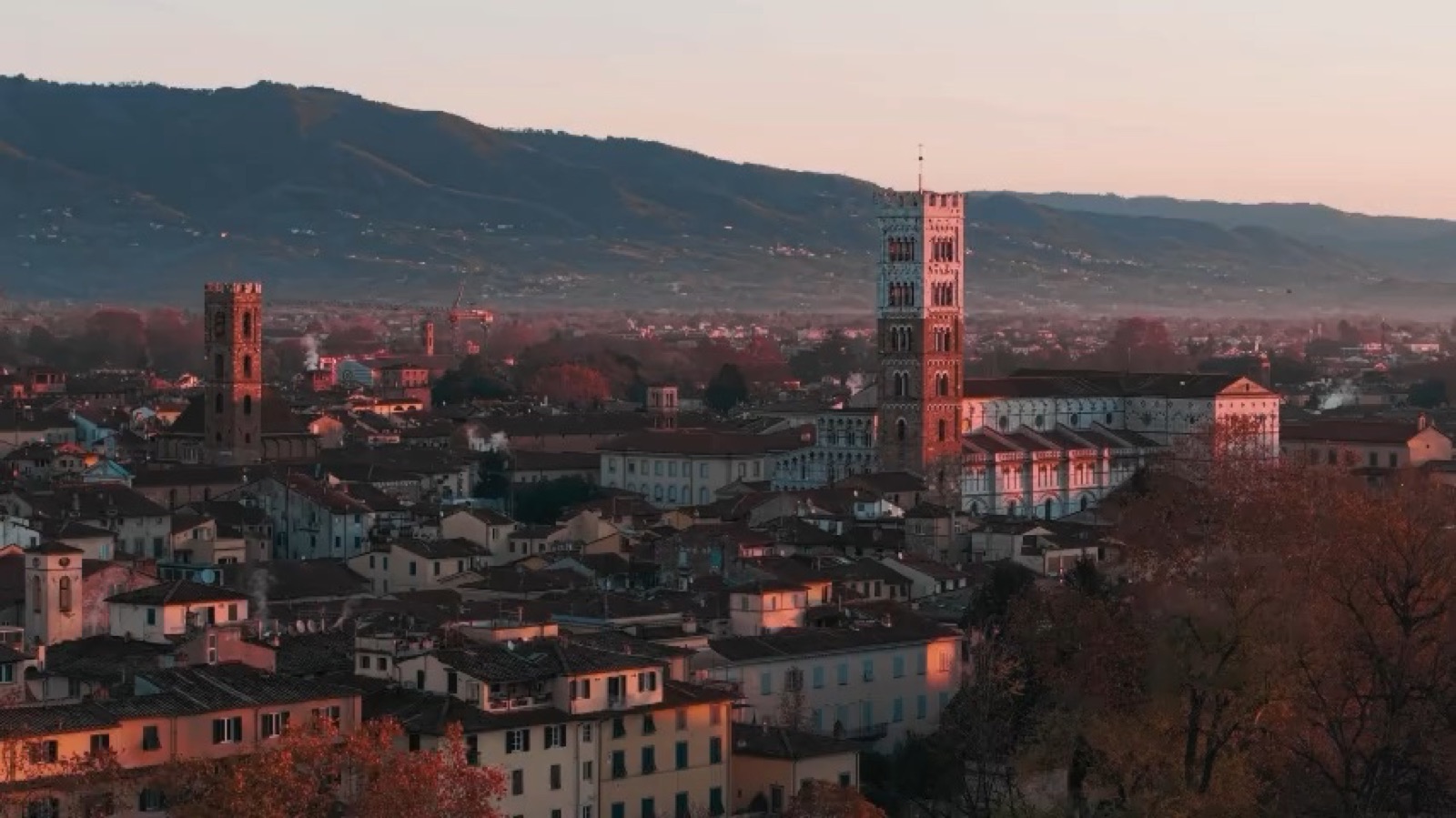
A republic that kept its outline.
Lucca sits in the plain of the Serchio, with the Apuan Alps to the west and the Pizzorne hills to the northeast. The Roman colony was founded in 180 BC. The street plan still remembers that: Via Fillungo follows the old cardo, and San Michele in Foro stands where the forum was.
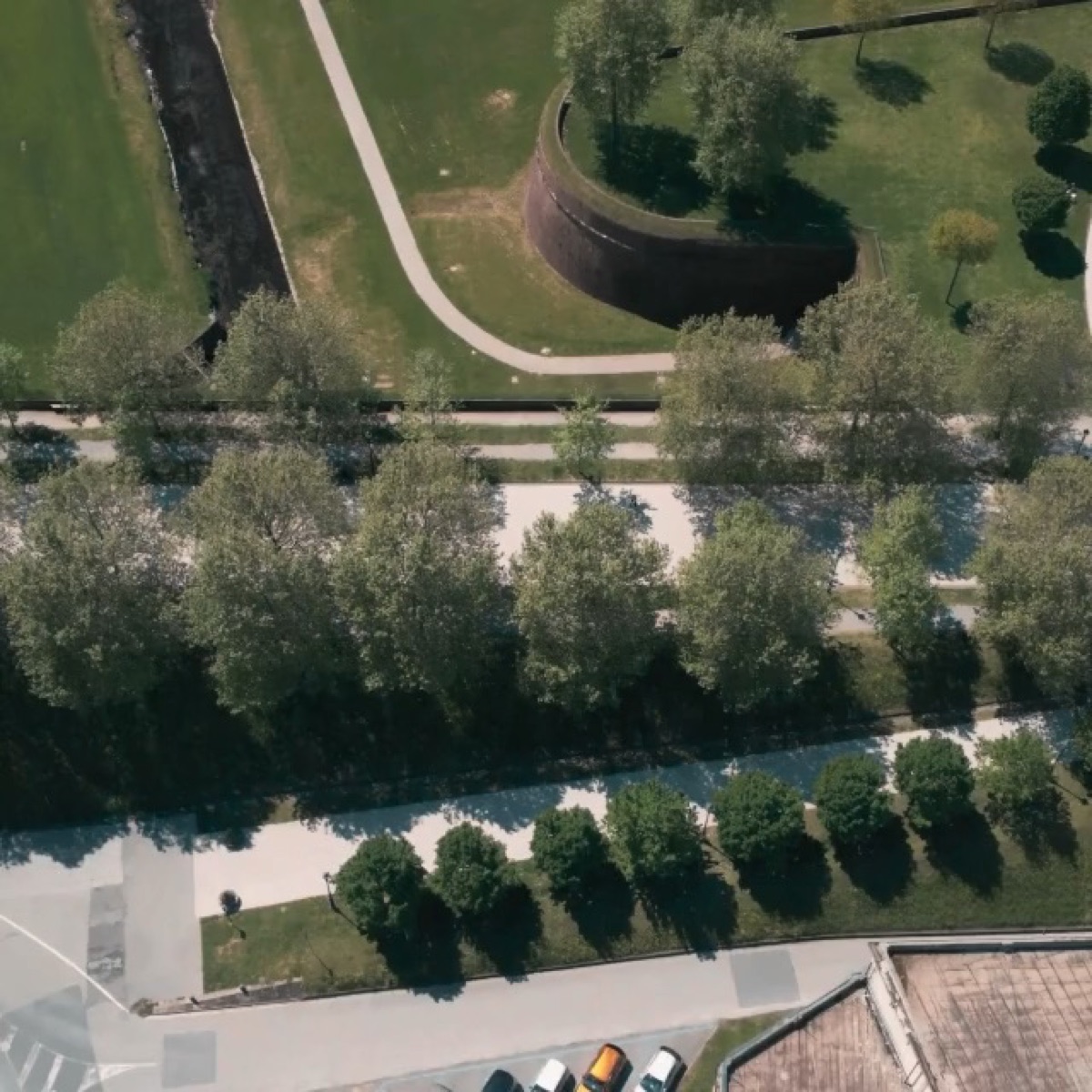
What defines the city now is the last circuit of walls. The Comune describes them as twelve earthwork curtains joining eleven bastions, faced in brick, about twelve metres high and thirty metres wide at the base, running a little over four kilometres. The work belongs to the Renaissance rebuilding, from the first half of the sixteenth century to the middle of the seventeenth, when artillery had made the medieval towers obsolete. They were never the scene of a famous siege. In the nineteenth century the rampart became a public promenade, planted with planes, horse chestnuts, hackberries and oaks. It is still the city’s park, and the clearest way to understand the size of the place: one complete walk, and the whole historic city is inside.
Lucca remained a republic long after most Tuscan cities had a prince. That independence ended in 1799. Elisa Bonaparte Baciocchi, Napoleon’s sister, ruled as Princess of Lucca, and after her Maria Luisa of Bourbon. The palaces and the villas outside the gates carry both centuries: mercantile houses of the republic, and the court taste that arrived when the republic was over.
Inside the walls
Houses of merchants, then of a court.
Palazzo Pfanner
On Via degli Asili, against the northern walls, Palazzo Pfanner is a seventeenth-century house built for the Controni. The garden, laid out in the early eighteenth century and attributed to Filippo Juvarra, is a small Italian parterre: lemon trees in pots, a line of statues, a fountain, and the bastion rising behind it. In the nineteenth century the house passed to Felix Pfanner, a brewer from the Tyrol. His descendant Pietro Pfanner, a surgeon and mayor of Lucca from 1920 to 1922, left the medical instruments now shown with the rooms.
The garden and the rooms are open on the calendar the house publishes, from spring through the end of the year, and they close when a private event is booked.
Palazzo Mansi
This is the city palace, at 43 Via Galli Tassi. It is not Villa Mansi at Segromigno. The house was assembled from older tower-houses and bought in 1616 by Ascanio Mansi, whose family had made its money in silk. Between 1686 and 1691 Raffaello Mansi had the piano nobile rebuilt in a full Baroque manner by the Lucchese architect Raffaello Mazzanti. The state bought the palace in 1965 and opened it in 1977 as a national museum: the residence, with much of its furniture and a set of Brussels tapestries, and a picture gallery of the sixteenth to eighteenth centuries. Visits follow the museum’s hours.
Palazzo Ducale
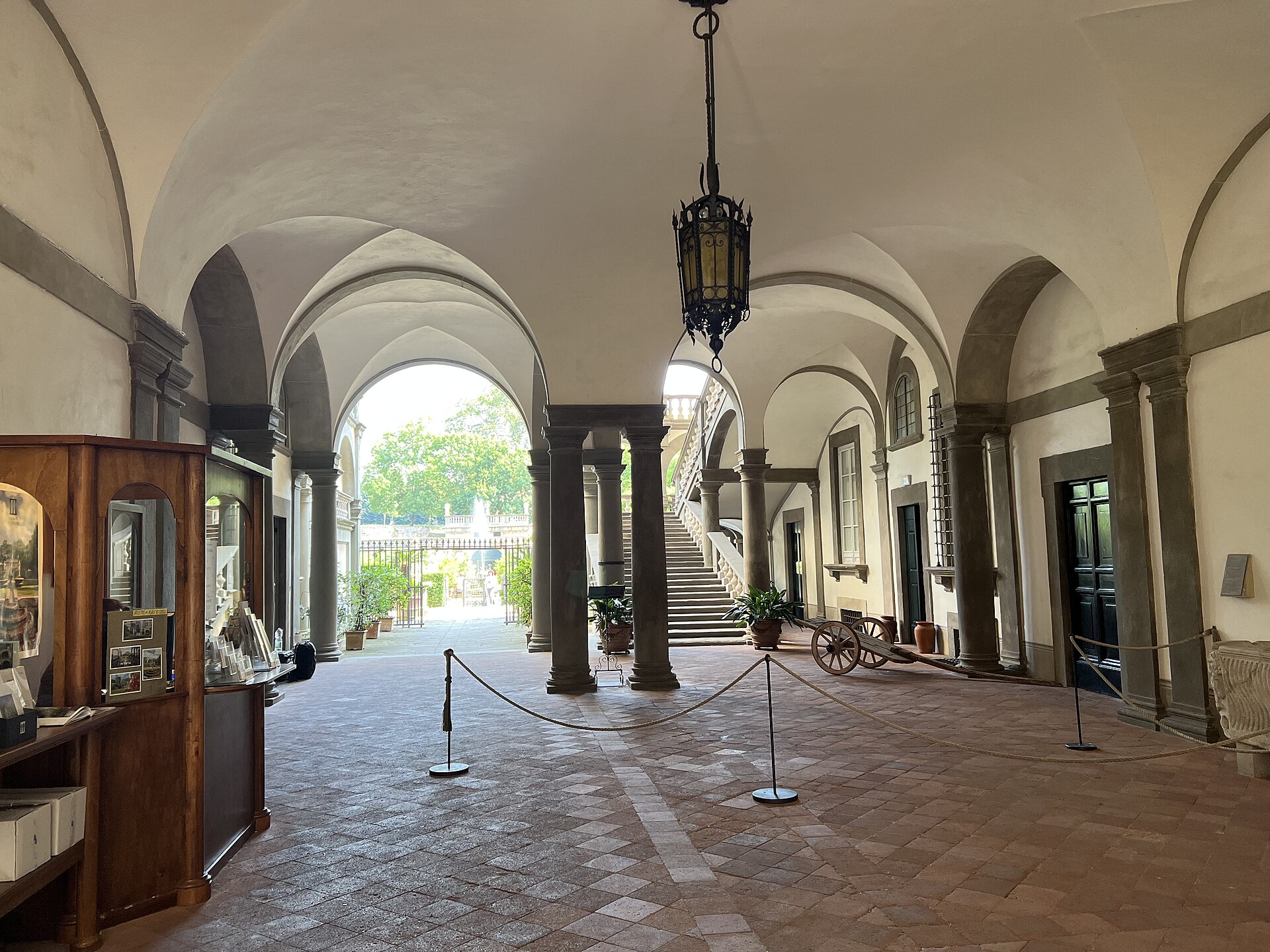
The palace on Piazza Napoleone is the old seat of government. In 1322 Castruccio Castracani built the fortress called the Augusta around an earlier house; after Lucca recovered its independence the fortress was demolished, around 1370, and the palace was kept for the Anziani, the republic’s senior council. Later campaigns involved Bartolomeo Ammannati in the sixteenth century and Filippo Juvarra in the eighteenth. Elisa had the square opened in front of it. For Maria Luisa of Bourbon, Lorenzo Nottolini added the neoclassical carriage passage and the monumental stair. Two courtyards remain: the Cortile Carrara, and the Cortile degli Svizzeri, where the republic’s Swiss guard was lodged. The building now holds the Province and a changing set of exhibitions. The courtyards belong to the public life of the square. The state rooms do not all open on the same terms.
Palazzo Guinigi and the Torre Guinigi
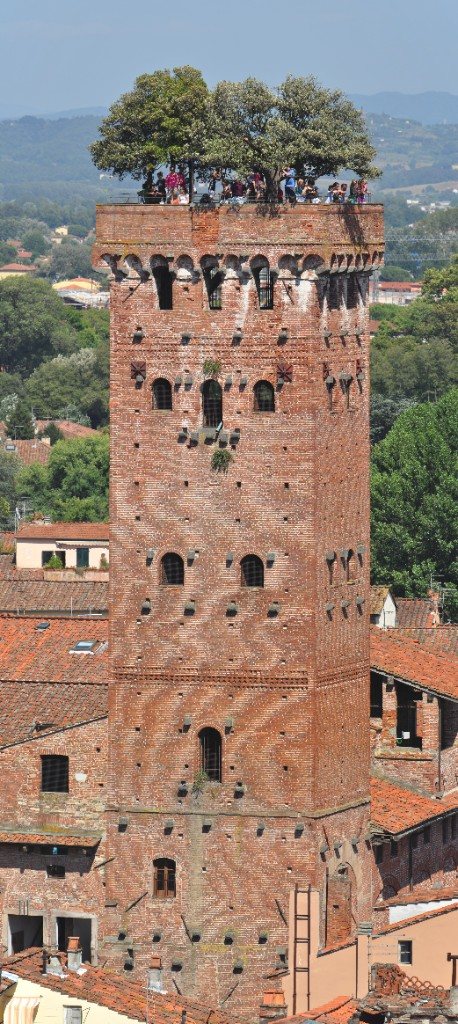
The Guinigi were the family who came closest to turning the republic into a signoria. Their medieval palace stands on Via Guinigi. The tower on Via Sant’Andrea, fourteenth century, is the one with holm oaks growing from the roof garden. The climb is ticketed and gives the other reading of the walls: the circuit as a green ring, and beyond it the plain. Villa Guinigi, farther east, is a different building, the national museum of the city’s earlier art. The name is easy to mix with the tower house. They are not the same place.
Villa Bottini
Inside the eastern walls, on Via Elisa, Villa Bottini was built for the Buonvisi in 1566 and is also called Villa Buonvisi al Giardino. Elisa acquired it in the early nineteenth century. It later passed through the Bottini family to the Comune, which uses it for exhibitions. In summer the garden has held an open-air cinema. Older guides name Matteo Civitali as architect. He died in 1501, before this house.
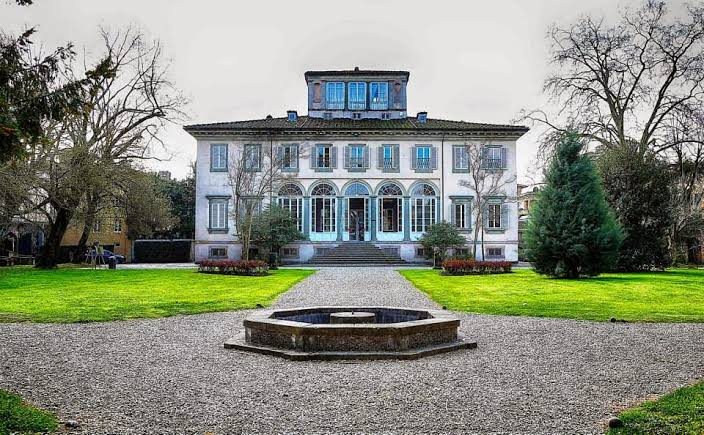
Palazzo Bernardini
A late-Renaissance palace on Piazza Bernardini, built for the Bernardini in the sixteenth century. It is a private building on the square, not a house museum with published rooms. It should not be confused with Villa Bernardini at Vicopelago, which is still in that family and is outside the walls.
The Lucchesia
A short drive, and another city of houses.
Outside the gates the same families built villas on the plain and on the first hills. Marlia, Segromigno and Camigliano sit a few kilometres apart, northeast of the city. Vicopelago is to the south. Some houses open on a ticket, some by appointment, and several close when a private day has been booked.
Villa Reale di Marlia
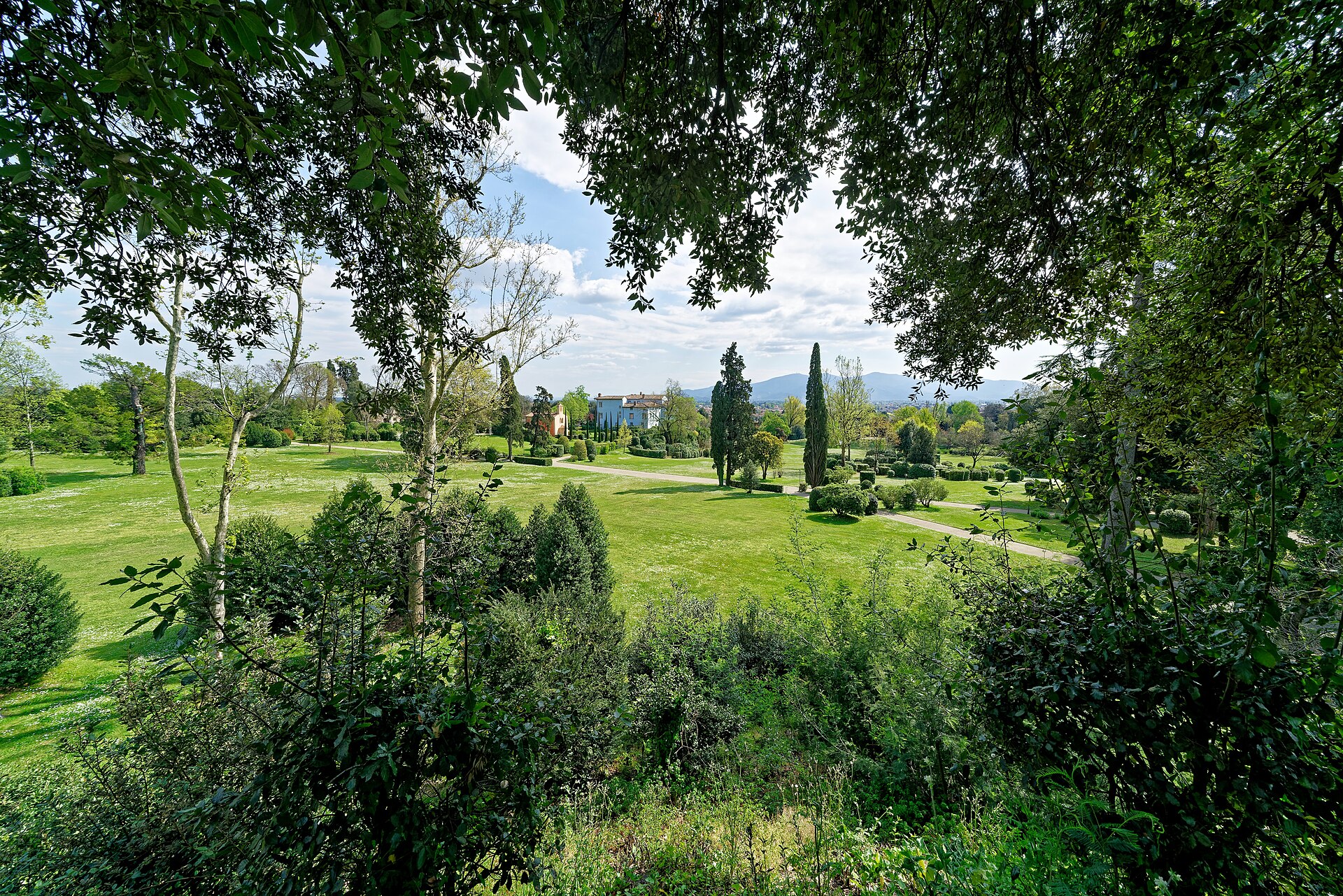
At Via Fraga Alta 2, in Marlia, a hamlet of Capannori. In 1651 the Orsetti bought the estate and remade the park: avenues, a lemon garden, and the green theatre planted between 1664 and 1670. In 1806 Elisa Bonaparte Baciocchi gave the old house a neoclassical front and took in the neighbouring bishop’s villa, with its sixteenth-century nymphaeum. The Pecci-Blunt, from 1923, asked Jacques Greber to add woodland and a lake around those older gardens. The park is about sixteen hectares. Since 2015 it has been in private hands, and the grounds and museums open on the estate’s own seasonal calendar.
Villa Torrigiani, Camigliano
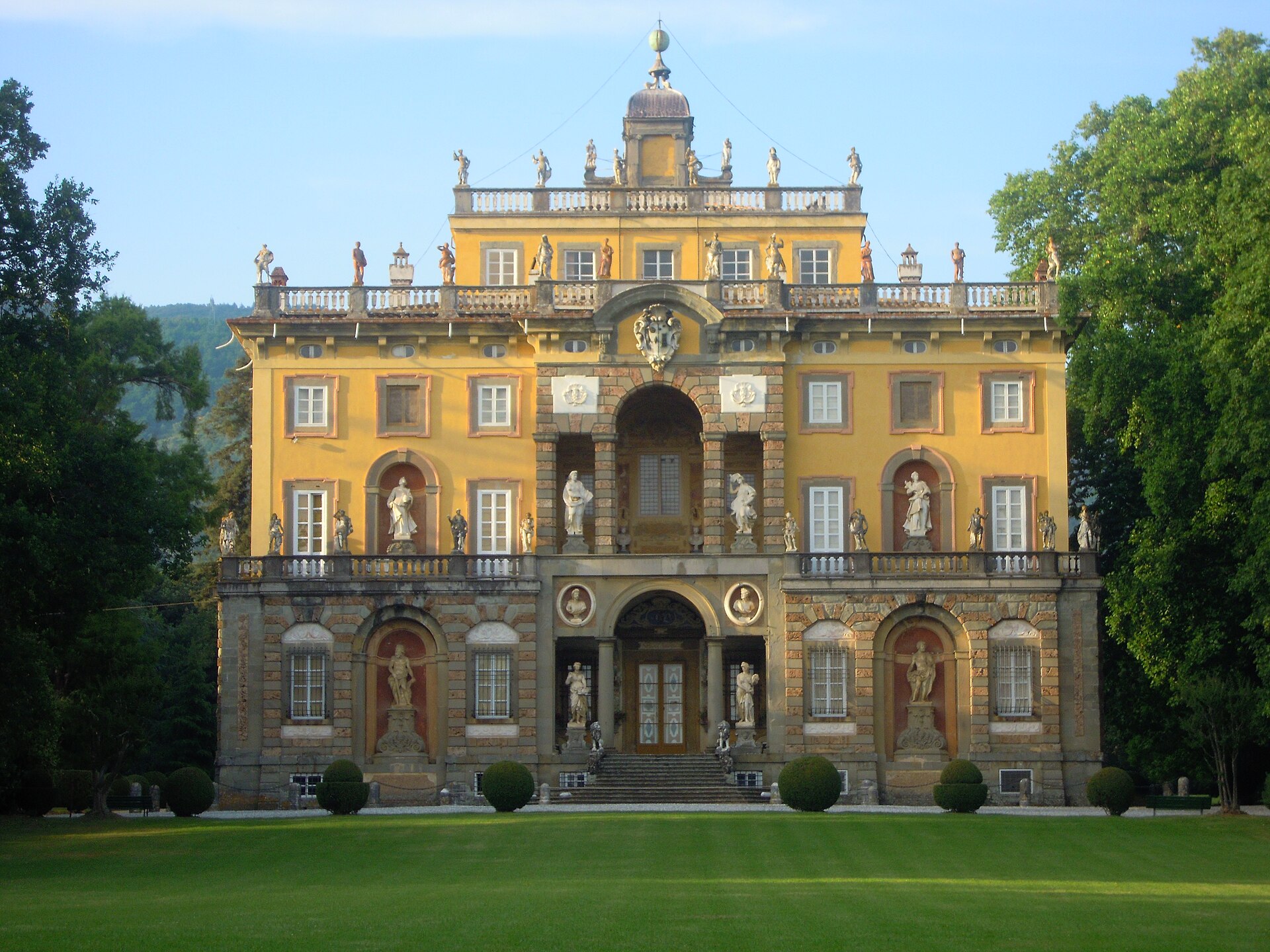
On Via del Gomberaio. A Buonvisi country house of the sixteenth century, then, from 1651, the house of Nicolao Santini, the republic’s ambassador at the court of Louis XIV. He gave it the palace front, the Garden of Flora, a nymphaeum and the water games. The comparison with Le Nôtre is a tradition, not a document. In 1816 the property passed to the Torrigiani, who added the romantic park and the cypress approach. The family still lives here. Garden and, in season, interiors open by ticket.
Villa Mansi, Segromigno in Monte
Via delle Selvette, Segromigno. Again, not Palazzo Mansi in the city. The villa began with the Cenami. The Mansi, the silk merchants, bought it in the seventeenth century. The light facade, with its double stair and central portico, is associated with Muzio Oddi. Garden work has been attributed to Juvarra; what one walks today is largely the nineteenth-century landscape, with the older fishpond and its statues still in place. The consortium of villas publishes seasonal hours and a fee. They change, and a private booking can close the gate.
Villa Grabau, San Pancrazio
On Via di Matraia, north of the city toward the hills. Built for the Diodati, altered in a neoclassical manner for the Cittadella in the mid-nineteenth century, and bought by the Grabau in 1868. The family still owns it. The park and the house open on a seasonal calendar, and they close when a private event is in the grounds. The estate itself lets two houses in the park, with a pool, and rents the limonaia and the villa for gatherings. That is the owner’s offer. It is not a room held by OHH! ITALY.
Villa Oliva, San Pancrazio
A Buonvisi villa nearby, with a two-storey loggia of stone from Matraia. The earliest plan usually cited is from 1593. The park is open to the public, as the regional tourism office describes it, and the estate uses the garden, the stables and the lemon house for events.
Villa Bernardini, Vicopelago
South of the walls, on Via del Cimitero di Vicopelago. The family still owns the house, a seventeenth-century villa with a green theatre. A visit is by reservation, guided, and takes about an hour, because the house is also a home.
The houses are named because the families repeat: Mansi in the city and at Segromigno, Bernardini on the square and at Vicopelago, Buonvisi at Bottini and at Oliva. A stay uses one villa, sometimes two. It does not collect the list.
A musical household
A cathedral school, then an opera house.
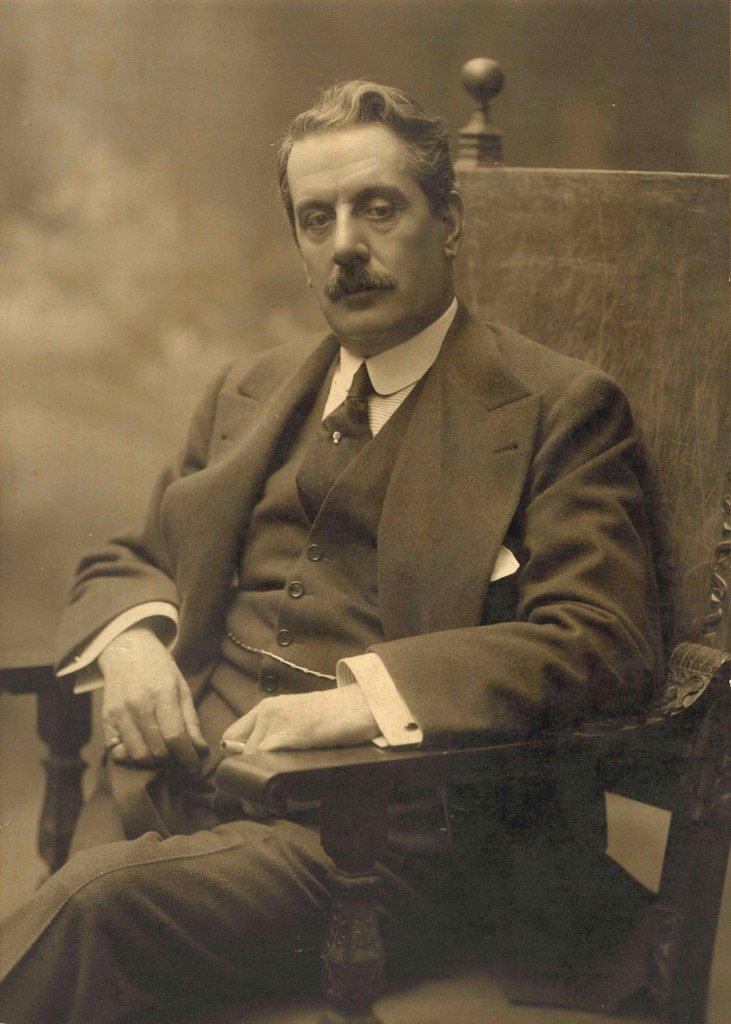
Giacomo Puccini
Giacomo Puccini was born in Lucca on 22 December 1858, in Corte San Lorenzo, off Via di Poggio. The family had been musicians at the cathedral for generations. The birthplace is a museum. He died in 1924. The summer festival of his operas is not in the city. It is at Torre del Lago Puccini, on Lake Massaciuccoli, in the municipality of Viareggio, about half an hour away. It can be part of a journey. It is not a monument of Lucca.
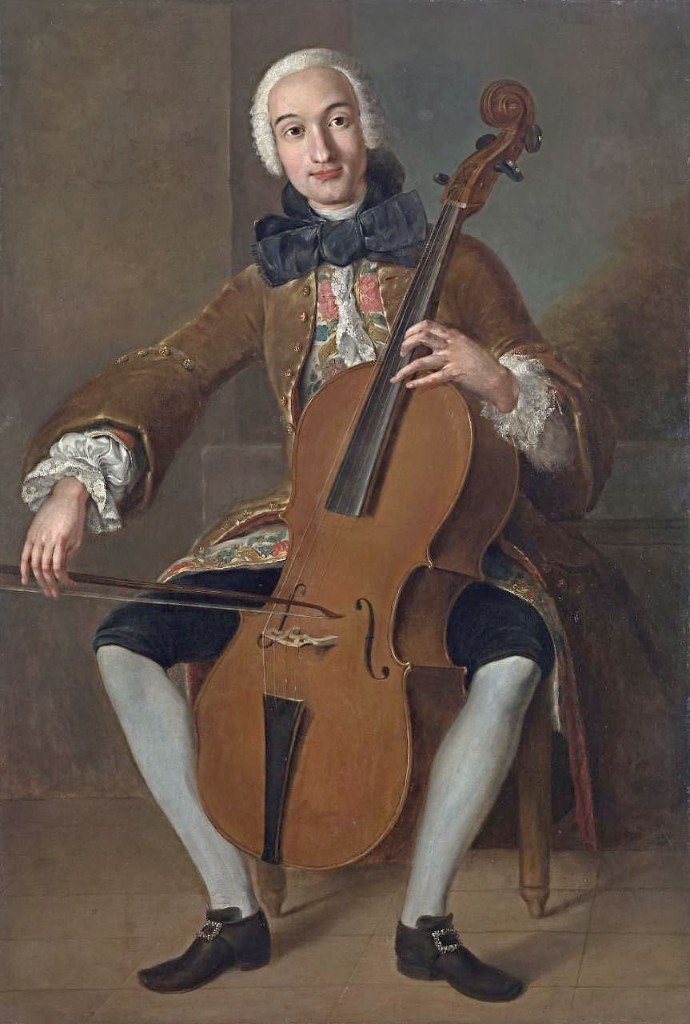
Luigi Boccherini
Luigi Boccherini was born here too, in 1743. The point is the same: Lucca had a musical household long before it had a tourist itinerary called Puccini.
Churches and the street
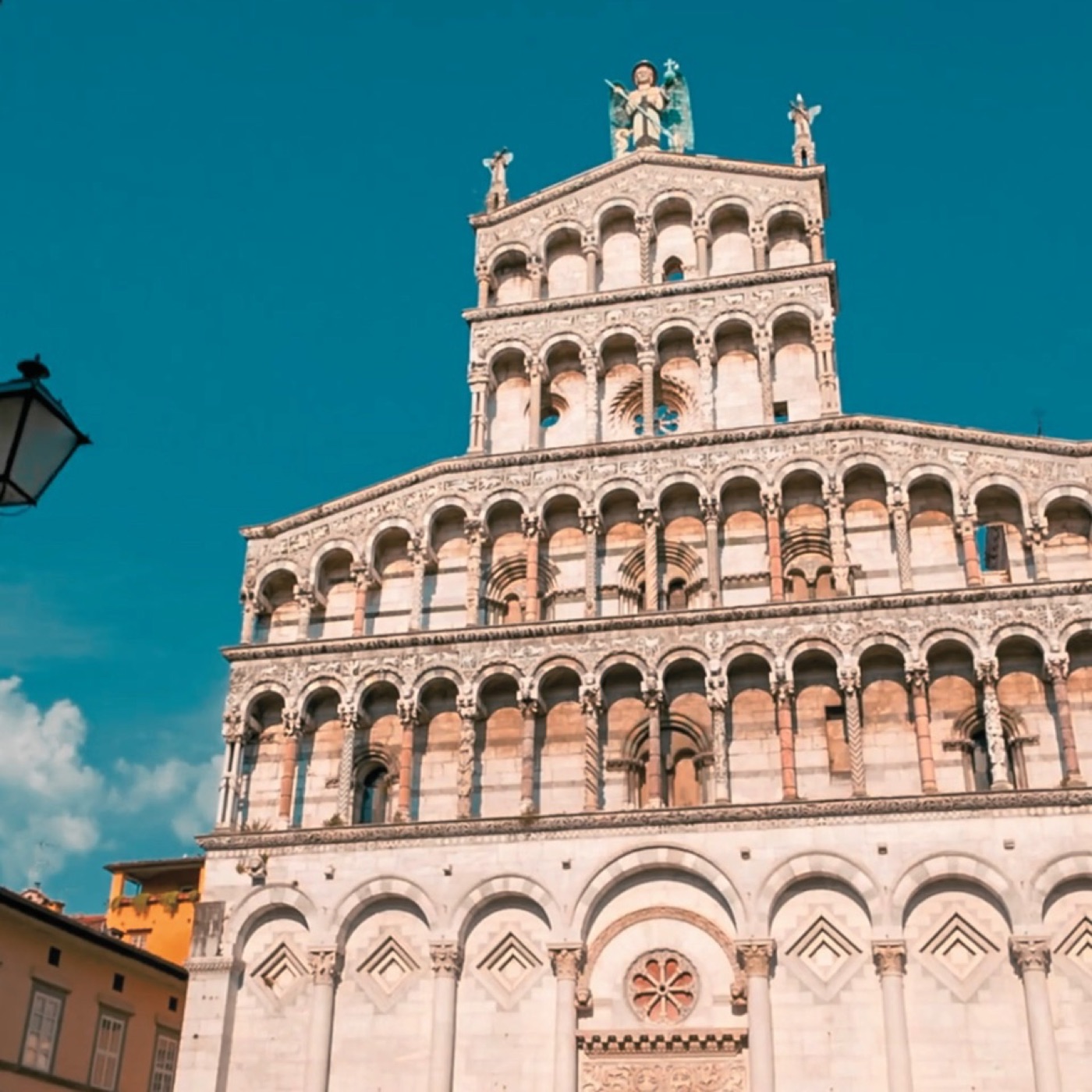
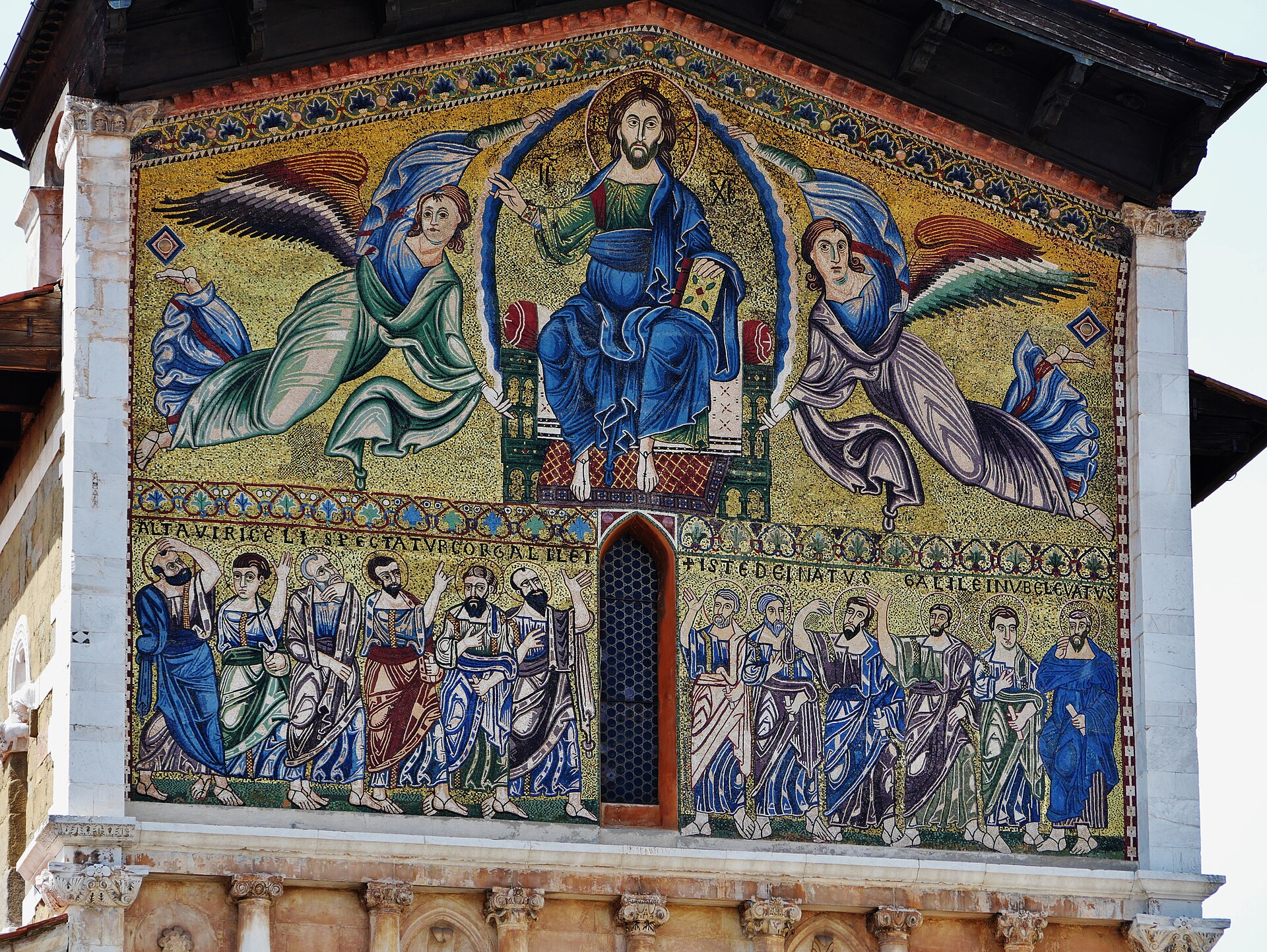
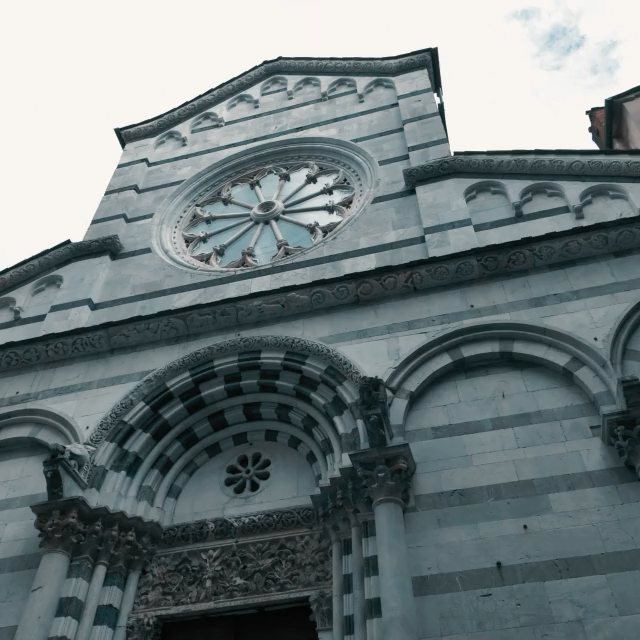
The churches are the other score. San Michele in Foro wears a facade that is really a screen, taller than the church behind it, crowded with inlaid columns and crowned by the archangel. The cathedral of San Martino keeps the Volto Santo, the wooden crucifix at the centre of the city’s medieval cult, and the tomb of Ilaria del Carretto, carved by Jacopo della Quercia in the first years of the fifteenth century. San Frediano, at the north end of the medieval expansion, has the great mosaic of the Ascension across its facade. Via Fillungo, between San Frediano and the Roman centre, is the street where that expansion settled into shops and palaces. None of this needs to be taken as a list. Two of them, walked slowly, are enough for a day.
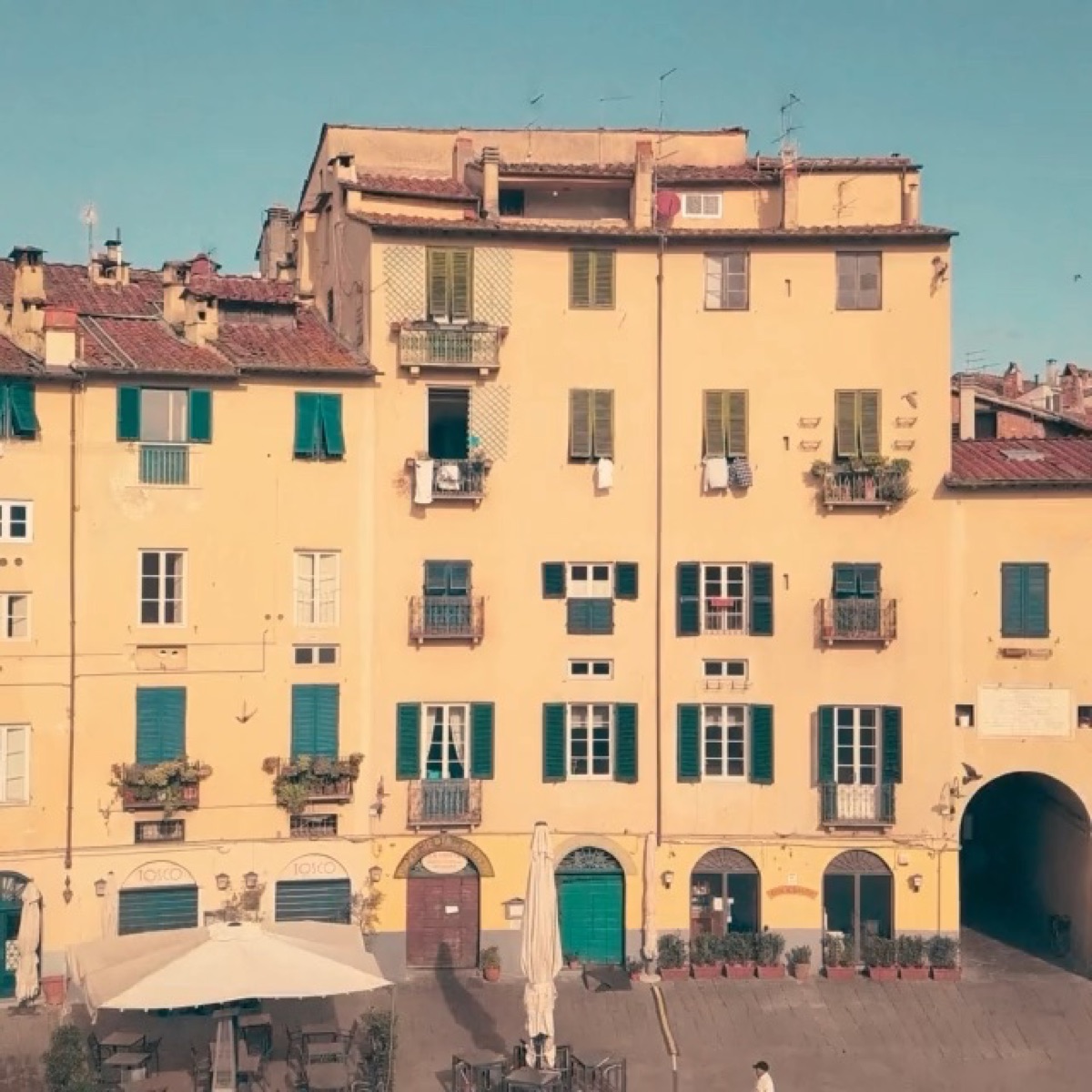
Piazza dell’Anfiteatro
The amphitheatre is Roman, second century, and the houses around the oval are medieval, built into the cavea. The open square is more recent. In the 1830s Lorenzo Nottolini cleared the buildings that had filled the arena, under Maria Luisa of Bourbon, and left the ellipse as Piazza dell’Anfiteatro. It is the city’s diagram: an ancient outline, inhabited, then emptied just enough to be read.
Outside
The plain, then the hills. Not all of Tuscany.
The Lucchesia is the territory of the old republic: the city, the villa plain, and the near hills. It is not Florence, and it is not the Garfagnana, which begins farther up the Serchio. A journey designed here can stay inside that smaller geography and still be full.
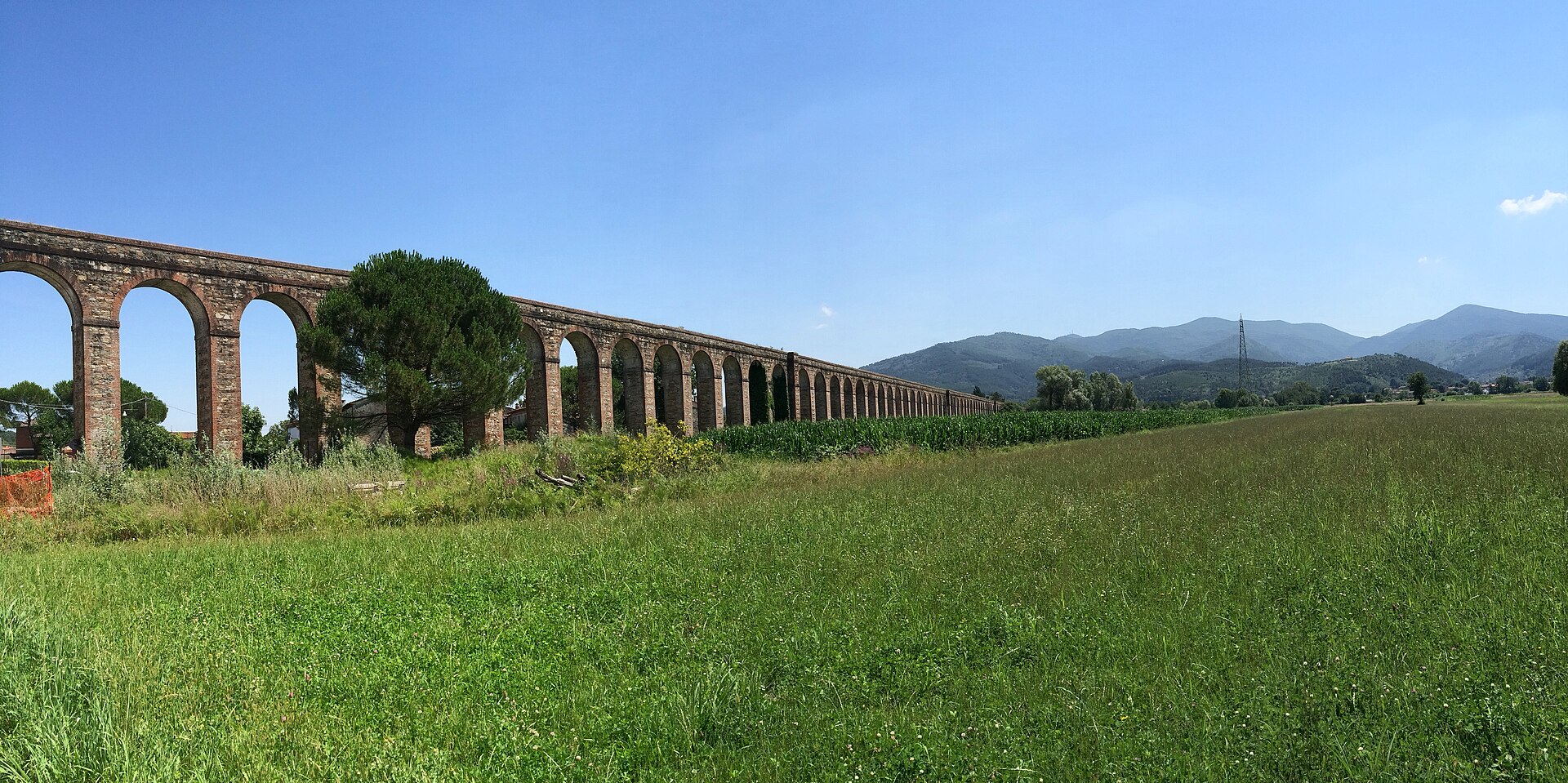
South of the walls, Lorenzo Nottolini’s aqueduct leaves the city for the hills of Guamo. The monumental tempietto at San Concordio, on Via del Tempietto, marks the southern end of that line of arches. It is the right scale of excursion: an hour, a precise piece of nineteenth-century engineering, and a return through the south gate.
Northeast, the road to Matraia passes Grabau and Oliva and climbs toward the Pizzorne. East, Camigliano and the cypress drive of Torrigiani. The Apuans stay on the western horizon. The coast at Viareggio is close enough for a reason, such as the festival at Torre del Lago, and far enough that it should be chosen, not assumed.
The week
Arranged for the people travelling.
OHH! ITALY writes the week once the dates, the party and the reason for Lucca are known. A guide is planned when the walls or a house need one. A car with a driver is planned when the day leaves the gates. The house for the night follows from the limited-traffic zone and from how many people are at the table. None of this is a programme held in advance.
What the week can hold is already on this page: the rampart, two palaces, one villa. Marlia, Segromigno and Camigliano are a few kilometres apart. They are not three visits in a morning.
The table uses the names of the place: Lucchese cooking, oil from the hills, the wines of the Colline Lucchesi and of Montecarlo. A producer is approached when the season and the cellar can receive a private visit. Torre del Lago belongs if the operas are the reason for the day. It is not added to every stay under the name Puccini.
The night
Hotels, and houses that are not hotels.
The monuments above are not accommodation, even when they host a wedding. The places that take guests are a separate list, and a short one.
Grand Universe Lucca
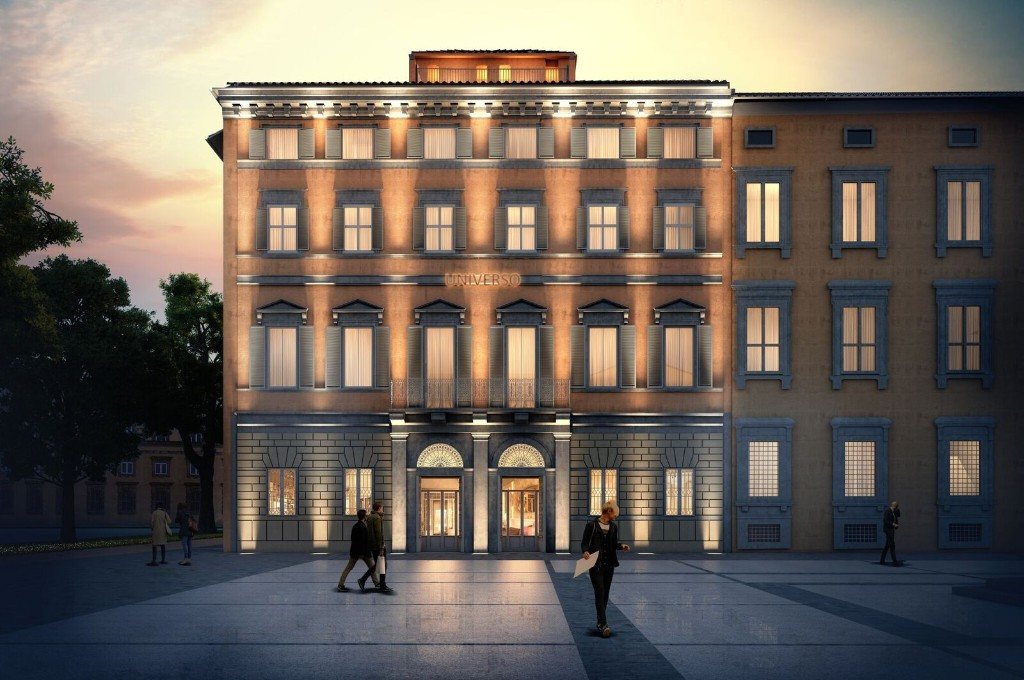
Grand Universe Lucca is a hotel in a historic palazzo on Piazza del Giglio, beside the Teatro del Giglio and a step from Piazza Napoleone. It is inside the limited-traffic zone. Guests’ cars are a matter for the hotel and the city gate, not a detail to improvise on arrival.
Locanda l’Elisa, Via Nuova per Pisa 1952, is a hotel in a late-nineteenth-century villa a few minutes south of the walls, with a garden. The name remembers the princess. The building is not Villa Bottini.
Villa Grabau lets two houses in its own park. That is the estate’s offer, seasonal like the visits, and subject to the family’s calendar. Palazzo Pfanner, Villa Torrigiani, Villa Mansi and Villa Bernardini appear in events listings. They are not proposed here as places to sleep.
Enquire
The enquiry is the beginning of the design.
OHH! ITALY designs the journey once the dates, the number of people, and the reason for Lucca are known. The walls, two palaces, and one villa are a coherent stay. A longer one reaches the hills, or continues to another part of Tuscany without pretending that Florence is a suburb of Lucca.
Sources
Five photographs are from Wikimedia Commons, reduced for the web and shown with a color grade. Each adapted photograph remains under the same licence as the original.
Lukas Beck, Il giardino di Palazzo Pfanner 01, Palazzo Pfanner, CC BY 4.0.

Holger Uwe Schmitt, 16 Hektar groß ist der Park der Villa Reale di Marlia. 01, Villa Reale di Marlia, CC BY-SA 4.0.

Marco.scarpellon, RSCN0464, Villa Torrigiani, CC BY-SA 3.0.

Zairon, Lucca Basilica di San Frediano Esterno Facciata Frontone 1, San Frediano, CC BY 4.0.

cisko66, Acquedotto Nottolini – panoramio, original photograph, Nottolini aqueduct, CC BY 3.0.
